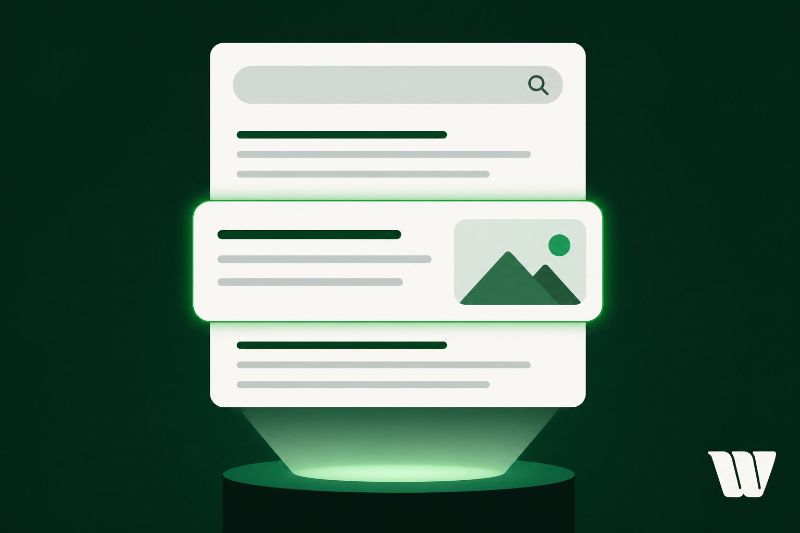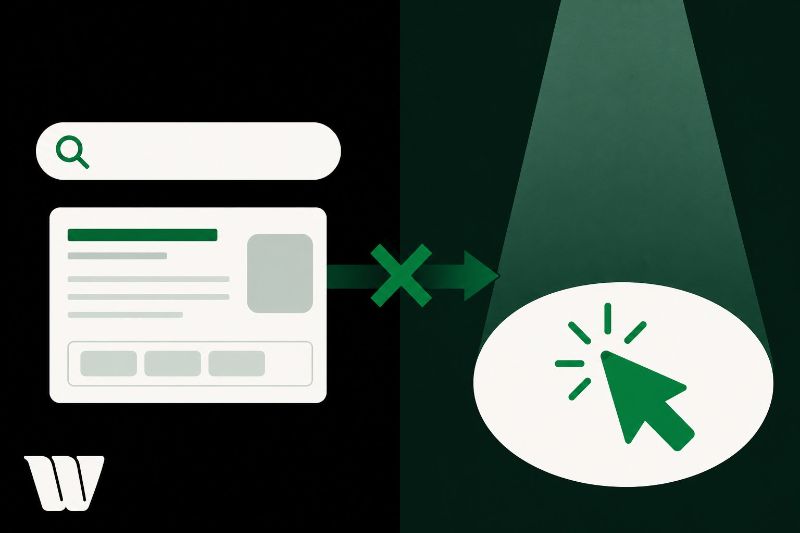
Retrieval-Augmented Generation (RAG) is an AI framework that connects large language models to external knowledge sources at inference time. Instead of relying solely on static, pre-trained knowledge, RAG retrieves contextually relevant documents from a vector database and injects them into the prompt before generating a response. This reduces hallucinations, improves factual accuracy, and eliminates the need for constant retraining when your data changes. Keep going to understand exactly how each stage of the pipeline works and when to use it.
Key Takeaways
- RAG stands for Retrieval-Augmented Generation, an AI technique that enhances large language models by connecting them to external knowledge sources.
- It operates through a three-stage pipeline: retrieving relevant documents, augmenting the prompt with context, and generating accurate responses.
- RAG reduces hallucinations and improves factual accuracy by grounding LLM responses in real, retrievable information.
- Unlike fine-tuning, RAG injects external knowledge at inference time, making it ideal for frequently updated or changing data.
- Common applications include legal research, healthcare, enterprise search, and customer support, where accuracy and citations are critical.
What Is RAG and Why Do LLMs Need It?
Retrieval-Augmented Generation (RAG) is a framework that enhances large language models (LLMs) by connecting them to external knowledge sources at inference time, allowing them to retrieve relevant information before generating a response.
LLMs trained on static datasets have a fixed knowledge cutoff, making them unreliable for time-sensitive or domain-specific queries. RAG addresses this by dynamically pulling relevant documents from external sources, grounding responses in verifiable, current data.
The RAG benefits are significant: reduced hallucinations, improved factual accuracy, and lower retraining costs.
You'll find RAG applications across enterprise search, legal research, medical Q&A, and customer support systems, where precision and up-to-date information are critical.
Rather than memorizing facts, RAG-enabled models retrieve and reason over them, making the architecture both scalable and adaptable.
How RAG Actually Works: The Retrieve-Augment-Generate Pipeline
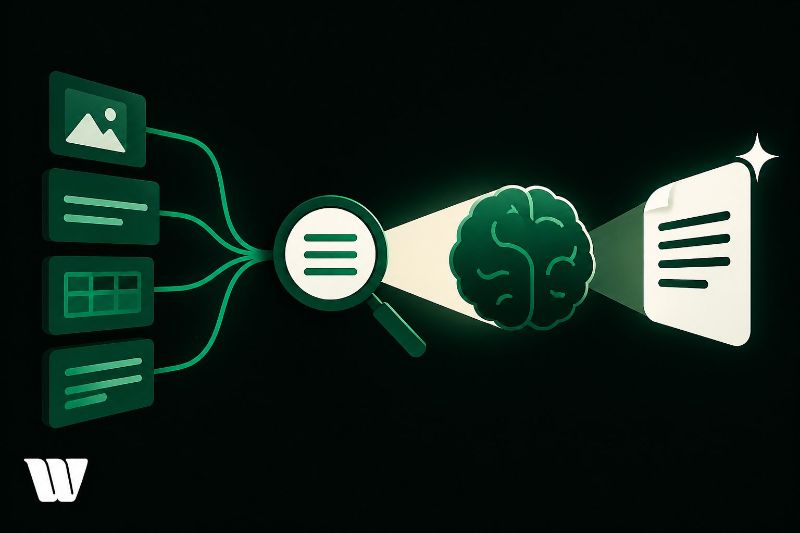
When you submit a query, the pipeline splits into three discrete stages.
First, a retrieval system — typically a vector database — fetches contextually relevant documents based on semantic similarity to your input. This stage determines information relevance before the model ever processes a token.
Second, those retrieved documents augment your original prompt, giving the LLM grounded context.
Third, the model generates a response using both its parametric knowledge and the retrieved content.
This pipeline efficiency means you're not retraining models to stay current — you're updating data stores instead.
That distinction directly supports model scalability. Every user interaction benefits from retrieval precision rather than static, potentially outdated training weights.
Where RAG Is Already Being Used
Three industries have moved RAG from experimental architecture to production deployment: legal research, enterprise knowledge management, and healthcare documentation.
In each domain, RAG applications solve the same core problem: grounding language model outputs in verified, domain-specific sources.
Legal teams use RAG to query case law without hallucination risk. Enterprises deploy it to surface institutional knowledge across siloed repositories. Healthcare systems leverage it to retrieve clinical guidelines during documentation workflows.
RAG benefits across these sectors include reduced hallucination rates, traceable citations, and lower retraining costs.
RAG challenges persist around retrieval precision, latency at scale, and chunking strategy.
You'll find RAG future development concentrated in hybrid retrieval systems combining dense and sparse methods.
Production adoption is accelerating, and the architectural patterns are consolidating around measurable performance benchmarks.
RAG vs. Fine-Tuning: What to Choose and When
Both RAG and fine-tuning improve model outputs, but they solve different problems—and conflating them leads to wasted compute and misaligned architecture decisions.
Fine-tuning adjusts model weights to internalize new behavior, tone, or domain-specific reasoning patterns. RAG applications, by contrast, inject external knowledge at inference time without touching weights.
Use fine-tuning when you need consistent output style, specialized vocabulary, or task-specific behavior baked in. Choose RAG when your data changes frequently, when retrieval accuracy matters more than learned behavior, or when RAG benefits like transparency and source attribution are priorities.
RAG comparisons with fine-tuning often miss a key point: they're not mutually exclusive.
RAG challenges—like retrieval latency or chunking errors—differ entirely from fine-tuning risks like catastrophic forgetting. Understand what's failing before choosing your fix.
The Real Limits of RAG and How to Overcome Them
RAG isn't a silver bullet, and understanding its failure modes is what separates a production-ready system from one that collapses under real workloads.
Four critical limits demand your attention:
- Data scalability degrades when your corpus grows faster than your indexing pipeline can handle — partition and shard strategically.
- Context relevance breaks down when retrieved chunks contain noise — refine chunking strategies and apply reranking models.
- Retrieval efficiency suffers under high query loads — implement approximate nearest neighbor algorithms like HNSW to maintain speed.
- Model accuracy collapses when retrieved context contradicts the query intent — use hybrid retrieval combining dense and sparse methods.
Treat each failure mode as an engineering problem with a measurable solution, not an inherent architectural weakness you simply accept.
Frequently Asked Questions
What Programming Languages Are Commonly Used to Build RAG Systems?
You'll commonly use Python for building RAG systems, as it's dominant in AI development. JavaScript and Java also support data retrieval pipelines, while frameworks like LangChain simplify natural language processing and integration tasks effectively.
How Much Does It Cost to Implement a RAG Solution?
Your RAG implementation costs vary widely based on scale and complexity. You'll face implementation challenges like infrastructure, API fees, and vector database expenses. A thorough cost analysis reveals budgets ranging from hundreds to thousands of dollars monthly.
Which Open-Source Frameworks Best Support RAG Application Development?
You'll find LangChain, LlamaIndex, and Haystack are the top open-source RAG frameworks for building RAG applications. They offer robust retrieval pipelines, vector store integrations, and modular architectures that streamline your development workflow efficiently.
Can RAG Systems Work Effectively in Low-Resource or Offline Environments?
Yes, you can deploy RAG systems offline, but you'll face significant low-resource challenges. Optimize offline capabilities by using compressed vector stores, quantized models, and lightweight retrievers like FAISS to maintain functional performance within constrained computational environments.
How Do You Evaluate and Measure the Performance of a RAG System?
You'll evaluate RAG system performance using key performance metrics like precision, recall, and BLEU scores. Apply evaluation techniques such as retrieval accuracy testing, answer relevance scoring, and faithfulness checks to measure response quality systematically.
Conclusion
RAG isn't a perfect solution, but it's one of the most practical ways you can ground LLMs in accurate, updatable knowledge without the cost and rigidity of fine-tuning. You've seen how retrieval, augmentation, and generation work together, where RAG already delivers value, and where its limits bite. Now it's your call—evaluate your data freshness requirements, latency tolerance, and retrieval quality before committing to any architecture.