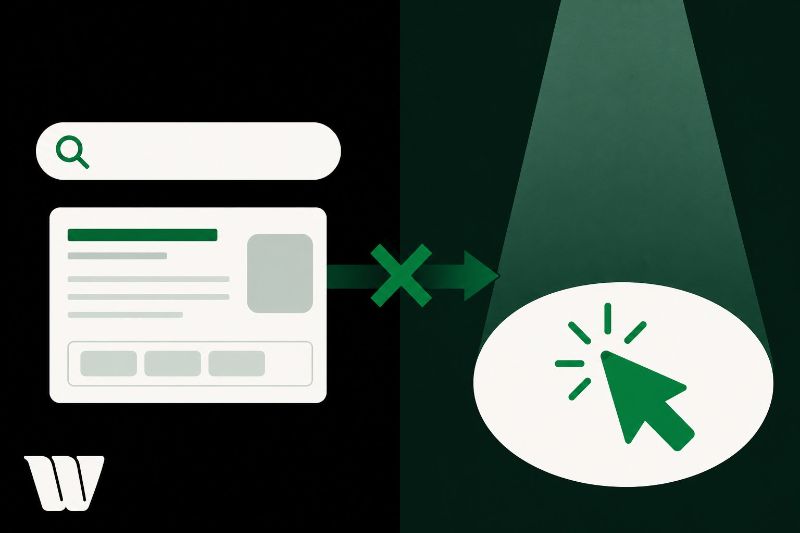
A SERP feature is any search result element Google displays beyond the standard organic blue links. You'll encounter them as featured snippets, knowledge panels, image carousels, People Also Ask boxes, local packs, and more. They target specific user intents — informational, navigational, or transactional — and appear based on structured data, content quality, and query context. Understanding how they work, and how to optimize for them, is exactly what we'll cover ahead.
Key Takeaways
- A SERP feature is a special result type Google displays beyond standard organic listings, designed to directly address specific user search intents.
- Common SERP features include featured snippets, knowledge panels, video carousels, and rich results, each serving different informational purposes.
- SERP features appear in dynamic formats, prioritizing direct answers and structured content to improve the overall search experience.
- Featured snippets occupy "Position Zero," displaying concise answers above organic results, boosting brand visibility and voice search optimization.
- Knowledge panels present structured entity information on the right side of SERPs, enhancing brand credibility and authority signals.
What Are SERP Features?
Search Engine Results Pages (SERPs) are no longer just a list of blue links — they're dynamic, feature-rich interfaces designed to deliver answers faster and with greater context.
SERP definitions have expanded considerably as Google continues to prioritize user intent over traditional organic listings. SERP evolution has transformed how search results are displayed, introducing elements like featured snippets, knowledge panels, image carousels, and local packs directly into search pages.
You're no longer competing solely for the top organic position — you're competing for visibility across multiple result formats.
Each SERP feature targets a specific user behavior, whether informational, navigational, or transactional. Understanding these features is critical for building an SEO strategy that captures attention before users even scroll past the first visible result.
The Most Common SERP Features Explained
Among the most impactful SERP features you'll encounter are featured snippets and knowledge panels, both of which directly influence click-through rates and search visibility.
Featured snippets pull structured content from your page and display it above organic results in position zero, making them a high-value target for on-page optimization.
Knowledge panels, powered by Google's Knowledge Graph, surface entity-based data about brands, people, and organizations, giving you a significant credibility boost when your site earns one.
Featured Snippets Explained
Featured snippets are Google's way of directly answering a user's search query at the top of the SERP, often referred to as "Position Zero" because they appear above the traditional organic results.
They're triggered when your content aligns closely with informational search intent. Google pulls a concise answer—typically a paragraph, numbered list, or table—directly from your page and displays it prominently.
To earn featured snippets, you'll need to structure your content clearly, using headers, bullet points, and direct answers to common questions.
Targeting question-based keywords like "how to" or "what is" considerably increases your chances of capturing this prime real estate.
While featured snippets boost visibility, they can reduce click-through rates since users often get their answer without visiting your site.
Knowledge Panels Overview
Knowledge panels are information boxes that appear on the right side of Google's SERP, pulling structured data from Google's Knowledge Graph to display key facts about entities—businesses, people, organizations, or places.
They're triggered by branded or entity-based searches, giving users instant, authoritative information without clicking through.
Knowledge panel benefits include increased brand visibility, enhanced credibility, and higher click-through rates.
When your entity appears in a knowledge panel, you're occupying premium SERP real estate at zero cost.
Knowledge panel optimization requires claiming your panel through Google's verification process, maintaining consistent NAP (Name, Address, Phone) data, and leveraging structured markup like Schema.org.
Keeping your Google Business Profile updated directly influences panel accuracy.
Authoritative backlinks and Wikipedia presence further strengthen your entity's Knowledge Graph recognition.
Does Appearing in SERP Features Help or Hurt Your Traffic?
Appearing in SERP features can greatly boost your visibility and click-through rates, but the impact on your organic traffic isn't always straightforward.
Some features, like featured snippets, can drive substantial traffic by positioning your content at the top of the page, while others, like knowledge panels, may answer users' queries directly without requiring a click.
Understanding both the benefits and drawbacks of SERP features is essential for crafting a strategy that maximizes your site's overall performance.
Benefits of SERP Features
Additional benefits include:
- Increased brand visibility — Your site appears prominently before standard organic results.
- Authority signals — Google selects trusted, well-structured content for SERP features.
- Competitive advantage — You can outrank higher-authority domains within specific feature types.
- Voice search optimization — Featured snippets frequently serve as voice search answers.
- Traffic diversification — Multiple SERP features can generate traffic from different search intents simultaneously.
Targeting SERP features strategically strengthens your overall SEO performance and expands your digital footprint beyond traditional rankings.
Drawbacks of SERP Features
While SERP features offer clear visibility advantages, they don't always translate into higher organic traffic — and in some cases, they can actively reduce it. When Google displays a featured snippet or Knowledge Panel, users often get their answer directly on the search results page without clicking through to your site.
This zero-click phenomenon directly impacts your click-through rate, even when you're ranking in position one.
From a user experience standpoint, SERP features shift engagement to Google's interface rather than your content. You're fundamentally providing value that benefits Google's ecosystem, not your own.
Studies show featured snippets can reduce organic clicks by up to 37%. If your monetization strategy depends on page visits, winning a SERP feature might actually cost you measurable traffic and revenue.
How Does Google Choose Which SERP Features to Show?
Google's algorithm determines which SERP features to display based on a combination of query type, user intent, and content relevance. It evaluates search intent to match features like featured snippets or knowledge panels to specific queries.
Keyword relevance and content quality are critical ranking factors that influence feature selection.
Google's algorithm updates continuously refine how features appear, prioritizing user experience and user engagement signals like click-through rates and dwell time.
You'll want to conduct competitive analysis to understand which features dominate your target queries.
Structured data markup, authoritative backlinks, and optimized content formatting directly impact your eligibility for SERP features.
Consistently monitoring algorithm changes guarantees your strategy remains aligned with Google's evolving selection criteria for displaying these valuable search elements.
Is Your Site Already Appearing in SERP Features?
Before optimizing for SERP features, you need to audit whether your site's already capturing them. Start with Google Search Console—it tracks rich result eligibility and performance data directly.
Filter impressions by search appearance to identify which structured features your pages currently trigger.
For deeper feature analysis, tools like Semrush, Ahrefs, or Moz track keyword-level SERP visibility across feature types—featured snippets, People Also Ask, image packs, and more.
Export your ranking keywords and cross-reference which ones already trigger features you're not owning.
Pay close attention to gaps where competitors hold features on keywords you rank for. That's your highest-priority optimization opportunity.
Regular audits keep your feature analysis current since Google's SERP visibility landscape shifts with algorithm updates and evolving search intent patterns.
How to Optimize for SERP Features
Optimizing for SERP features requires matching your content structure to how Google extracts and displays information for each feature type.
Apply targeted SERP optimization techniques by aligning content with specific feature formats—concise answers for featured snippets, schema markup for rich results.
Use keyword targeting strategies focused on question-based queries, long-tail terms, and conversational phrases.
Prioritize content quality enhancement by delivering accurate, structured, authoritative information Google can confidently surface.
Implement structured data implementation using Schema.org vocabulary to signal eligibility for rich results.
Practice user intent alignment by addressing informational, navigational, and transactional queries precisely.
Apply mobile optimization focus since most SERP features display prominently on mobile.
Run competitor analysis tactics to identify feature gaps.
For local businesses, incorporate local SEO considerations targeting map packs and local panels.
Which SERP Features Should You Actually Target?
Not every SERP feature deserves equal effort—your targeting priorities should align with your site's authority, niche, and traffic goals.
If you're a new site with low domain authority, focus on featured snippets and People Also Ask boxes, since they reward well-structured, question-based content. For e-commerce, prioritize Shopping Ads and product schema. Local businesses should chase local packs aggressively.
Align your content strategy with features that deliver measurable click-through improvements for your specific target audience. Use Google Search Console data to identify queries already ranking in positions 1–10—these are your highest-probability snippet opportunities.
Video carousels suit YouTube-integrated strategies, while knowledge panels require brand entity optimization.
Don't spread resources thin. Pick two or three high-impact features based on your vertical, then execute precisely.
Frequently Asked Questions
Can SERP Features Appear Differently Across Various Countries and Regions?
Yes, you'll notice SERP localization causes regional variations in how features display. Google tailors knowledge panels, local packs, and shopping results based on your location, language, and regional search behavior patterns.
Do SERP Features Change Based on the Device Being Used?
Yes, SERP features absolutely change based on your device. You'll notice distinct device variations between mobile and desktop results, as Google tailors each user experience differently, prioritizing features like local packs or image carousels accordingly.
How Long Does It Typically Take to Appear in SERP Features?
There's no fixed timeline for SERP feature visibility—it varies based on SERP timing factors like content quality, crawl frequency, and competition. You can typically see results within days to several months after optimization.
Can Paid Ads Influence or Compete With Organic SERP Features?
Yes, paid ads can impact your organic SERP feature visibility. They'll compete for ad placement, affecting click-through rates and organic competition. Aligning user intent across both traffic sources maximizes your overall visibility impact effectively.
Do SERP Features Impact a Website's Overall Domain Authority Score?
SERP features don't directly impact your domain authority score. However, earning them signals strong content relevance, which can boost your search rankings over time, indirectly strengthening your site's overall domain authority through increased visibility and engagement.
Conclusion
SERP features aren't just nice-to-haves—they're essential real estate in today's competitive search landscape. By understanding how Google selects and displays these features, you can strategically optimize your content to earn featured snippets, knowledge panels, and more. Don't leave visibility on the table. Audit your current SERP presence, identify high-value feature opportunities, and implement targeted optimizations. The data is clear: capturing SERP features drives higher click-through rates and stronger organic performance.