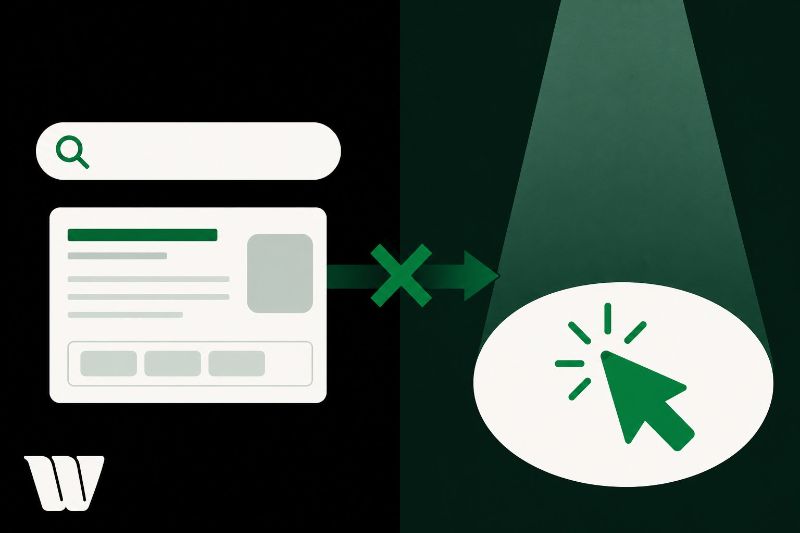
Zero-click searches happen when Google answers a query directly on the search results page, so users never visit your site. About 60% of all Google searches now end without a click, driven by featured snippets, knowledge panels, and instant answers. For SEO, this means your organic traffic doesn't reflect your true search visibility. Understanding how these zero-click features work—and how to adapt—is where your strategy gets its edge.
Key Takeaways
- Zero-click searches occur when Google answers queries directly on the SERP, eliminating the need to visit external websites.
- Approximately 60% of Google searches end without a click, significantly reducing organic traffic for many websites.
- SERP features like featured snippets, knowledge panels, and local packs are primary drivers of zero-click search growth.
- Informational and navigational queries suffer the most, with average organic CTR dropping below 2% for many categories.
- SEO strategies must shift toward owning SERP features through schema markup, conversational keywords, and question-and-answer content formats.
What Are Zero-Click Searches?
A zero-click search occurs when a user's query is answered directly on the search engine results page (SERP), eliminating the need to click through to any website.
Google fulfills search intent through features like featured snippets, knowledge panels, local packs, and instant answers. These elements surface precise information directly within the SERP, satisfying user behavior without requiring further navigation.
According to SparkToro, roughly 60% of Google searches end without a single click.
You're seeing this shift because search engines have evolved into answer engines rather than directory tools. Understanding zero-click searches isn't optional for SEO professionals—it's critical.
They fundamentally reshape how you measure visibility, traffic, and content performance, demanding a strategic rethink of how organic presence translates into measurable business value.
Why Zero-Click Searches Are Surging on Google
Understanding what zero-click searches are is only half the picture—you also need to know what's driving their rapid expansion.
Google's algorithmic evolution has fundamentally reshaped search behavior, prioritizing instant answers over traditional click-through results. Four core forces are accelerating this shift:
- Featured snippets now directly satisfy user intent by surfacing precise answers at position zero.
- Knowledge panels aggregate entity data, eliminating the need to visit source websites.
- Voice search growth demands immediate, conversational responses that don't require screen interaction.
- Mobile-first indexing favors compact, digestible SERP features that resolve queries without additional navigation.
Google's internal data confirms over 50% of searches end without a click.
You're no longer competing solely for rankings—you're competing for visibility within an increasingly self-contained search ecosystem.
The SERP Features Stealing Your Zero-Click Search Traffic
Everything eating into your organic click-through rate has a name—and most of it lives directly on the SERP.
Featured snippets pull exact answers above position one. Answer boxes resolve queries without a single scroll. Knowledge panels consolidate brand and entity data instantly.
Local packs dominate map-based intent, redirecting users to Google's interface rather than your site. People Also Ask expands laterally, trapping users in Google's own ecosystem.
Related searches extend sessions internally. Video results and image search capture visual intent before users reach traditional listings.
Rich results add structured context that satisfies curiosity upfront. Instant answers handle calculations, definitions, and conversions immediately.
Each feature represents a deliberate Google mechanism that delivers value to users while systematically reducing the organic traffic you'd otherwise capture.
Which Industries Lose the Most to Zero-Click Searches?
Zero-click searches hit certain industries harder than others, and understanding where you're most vulnerable helps you adapt your strategy.
If you're in news and media, local business, or health and finance, you're operating in sectors where Google's SERP features most aggressively intercept organic traffic before users ever reach your site.
Data consistently shows these industries absorb the highest rates of zero-click losses, making them the most critical battlegrounds for SEO visibility.
News and Media Sites
News and media sites take one of the hardest hits from zero-click searches, largely because Google's featured snippets and "Top Stories" carousels deliver headline summaries directly on the SERP.
Search algorithms now prioritize instant news consumption, stripping media visibility before audiences ever click through. Digital journalism suffers when information retrieval happens entirely on Google's interface, collapsing content engagement metrics and devastating audience targeting strategies.
Here's what online competition looks like for news publishers:
- Traffic drops 20-30% when featured snippets answer breaking story queries
- Top Stories carousels satisfy readers without requiring site visits
- Search algorithms favor structured data, disadvantaging smaller outlets
- Audience targeting collapses when zero-click behavior fragments reader journeys across platforms
Local Business Listings
Local businesses absorb some of the heaviest zero-click losses, particularly when Google's Knowledge Panels and Local Pack results surface hours, addresses, phone numbers, and reviews directly on the SERP.
If you're managing a local brand, prioritize citation accuracy and listing consistency across all directories to maintain trust signals. Deploy review management strategies to influence star ratings that appear in zero-click results, since those ratings shape user decisions before any click occurs.
Strengthen local optimization through keyword localization and competitive analysis to identify gaps competitors aren't filling. Invest in geo targeted advertising to capture audiences that zero-click results can't fully convert.
Maintain mobile responsiveness and customer engagement channels, and monitor your online reputation rigorously—because zero-click doesn't eliminate purchase intent; it just repositions where your brand must prove itself.
Health and Finance Sectors
Health and finance sectors take some of the hardest hits from zero-click searches, and the data makes clear why. Google prioritizes instant answers for health insights and financial literacy queries, stripping traffic directly from authoritative sources.
Consider what users see before they ever reach your site:
- Medical symptom panels displaying diagnoses, causes, and treatments without a single click required
- Drug interaction cards pulling pharmaceutical data directly into search results
- Live stock tickers and currency converters answering financial literacy questions instantly
- Mortgage calculators and interest rate tables embedded within Google's interface
Your content answers the question—Google delivers it. You generate zero visits.
These sectors experience click-through rate drops exceeding 37% on informational queries, making strategic content restructuring not optional, but essential for sustained organic visibility.
How Zero-Click Searches Are Tanking Organic Click-Through Rates
If you're tracking organic performance, the numbers don't lie—Semrush's 2023 data shows that over 57% of Google searches now end without a single click to an external site.
You're losing traffic not because your rankings dropped, but because Google's featured snippets, knowledge panels, and AI-generated answers are resolving queries directly on the search results page.
As zero-click trends accelerate with each algorithm update, your CTR continues to erode even when you hold the top organic position.
Rising Zero-Click Trends
The numbers don't lie—zero-click searches are fundamentally reshaping the organic search landscape, and the trend is accelerating. Rising search visibility for featured snippets combined with user behavior shifts toward instant answers is squeezing traditional click-through opportunities greatly.
Consider these escalating data points:
- 46.5% of all Google searches now end without a single click.
- 65% of mobile searches result in zero clicks, outpacing desktop behavior.
- Featured snippets capture 35x more zero-click outcomes than standard organic results.
- Voice search queries produce zero-click results nearly 100% of the time.
You're competing against Google's own answer engine now. Understanding these trajectories isn't optional—it's foundational to restructuring your SEO strategy before your organic traffic erodes further.
CTR Decline Factors
When Google serves instant answers directly on the search results page, your organic listings lose their primary value proposition—being the destination.
Semrush data shows average organic CTR has dropped below 2% for many informational queries, a direct consequence of featured snippets, knowledge panels, and People Also Ask boxes intercepting user intent before users reach your links.
Click through trends reveal a sharp performance split: transactional queries still generate clicks, while informational and navigational queries hemorrhage traffic to SERP features.
Position one listings now capture roughly 27% fewer clicks than they did pre-featured snippet expansion.
You're fundamentally competing for visibility on a results page engineered to keep users exactly where they already are.
Zero-Click SEO Strategies That Actually Drive Results
Zero-click searches now account for over 58% of all Google searches, meaning your traditional click-through-rate metrics no longer tell the full story of your search visibility.
Winning in this landscape requires deliberate zero click optimization built around structured data, user intent, and competitive analysis.
Execute these four strategies immediately:
- Mark up content snippets with schema to capture featured answers across mobile search and voice search queries.
- Align keyword targeting with conversational phrases that match search algorithms' natural language processing priorities.
- Audit competitor featured answer placements through systematic competitive analysis to identify exploitable content gaps.
- Restructure existing pages using question-and-answer formats that satisfy user intent while positioning your content for direct SERP visibility.
Own the result. Don't just chase the click.
The Metrics That Reveal Your True Search Visibility
Because click-through rate no longer captures the full scope of your search performance, you need a broader measurement framework that accounts for zero-click visibility. Track impression share alongside clicks to assess your true search visibility.
Google Search Console delivers critical ranking analysis data, showing keyword performance across positions where users see but don't click your content. Supplement this with traffic metrics from GA4 to identify where click behavior patterns shift.
Monitor branded search volume growth—it signals that zero-click exposure is building awareness even without direct visits. Evaluate user engagement signals like return visit rates, which often reflect SERP-driven recognition.
Use analytics tools that segment navigational versus informational queries, enabling accurate data interpretation across intent types. Together, these metrics reveal performance that CTR alone conceals.
Frequently Asked Questions
Are Zero-Click Searches More Common on Mobile or Desktop Devices?
You'll find zero-click searches are more common on mobile devices. Mobile user behavior drives higher zero-click rates due to featured snippets and local results, while desktop search trends show users more frequently clicking through to websites.
Do Zero-Click Searches Affect Paid Search Ads and PPC Campaigns?
Zero-click searches don't directly impact your paid ads strategy, since ads appear above organic results. However, they can reduce your overall search visibility, so you'll want to optimize bidding and ad copy to capture remaining click opportunities.
How Do Zero-Click Searches Impact Brand Awareness and Recognition?
Zero-click searches boost your brand visibility by placing your content directly in front of users. You'll build audience trust, align with search intent, and strengthen organic reach without requiring clicks, making your content strategy more impactful.
Can Small Businesses Compete Effectively in a Zero-Click Search Environment?
Yes, you can compete effectively by leveraging local visibility strategies like optimizing Google Business Profiles and implementing content optimization techniques that target featured snippets, structured data, and voice search queries, helping you capture zero-click real estate efficiently.
Will Zero-Click Searches Continue Growing as AI Search Evolves Further?
Yes, zero-click searches will keep growing as AI advancements reshape search behavior. You'll need to adapt your content strategy, optimize for SERP features, and leverage data analysis to align with evolving user intent and voice search trends.
Conclusion
Zero-click searches aren't going away—they're accelerating. You've seen the data: organic CTRs are dropping, SERP features are consuming more real estate, and Google's keeping users on its platform longer. But that doesn't mean you're powerless. By optimizing for featured snippets, building brand authority, and tracking beyond traditional click metrics, you'll capture visibility even when clicks don't materialize. Adapt your strategy now, or watch competitors claim the search presence you're leaving behind.