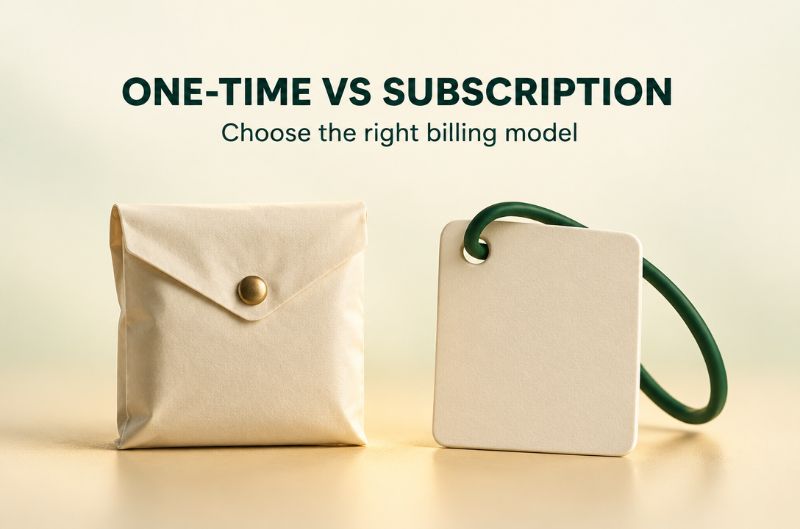
To choose between a one-time purchase and a subscription, track your realistic usage first. If you'll use it fewer than three times per month, a one-time purchase likely saves you money. For weekly or daily use, a subscription's ongoing updates and scalability justify the cost. Calculate your break-even month by dividing the one-time price by the monthly fee. The deeper details ahead will sharpen your decision substantially.
Key Takeaways
- Track realistic usage frequency; fewer than three uses per month favors a one-time purchase, while weekly or daily use justifies a subscription.
- Calculate the break-even month by dividing the one-time price by the monthly fee to determine long-term cost efficiency.
- Subscriptions deliver strong value when products update frequently, you use them weekly, and annual costs stay below 30% of the one-time price.
- Read contracts carefully for auto-renewal clauses, cancellation penalties, and anchor pricing tactics that can obscure the true cost of subscribing.
- Match your billing cycle tolerance to your usage pattern; recurring needs suit subscriptions, while situational needs favor one-time purchases.
One-Time Purchase vs. Subscription: What's the Real Difference?
When you're deciding how to pay for a product or service, the structure of the deal shapes more than just your upfront cost—it determines your long-term value, flexibility, and risk exposure. A one-time purchase transfers full ownership immediately, locking in your price and eliminating recurring charges. You capture purchase benefits like permanent access, no cancellation risk, and predictable total spending.
Subscriptions work differently. You're paying for ongoing access, updates, and often expanded features over time. Subscription flexibility lets you scale up, downgrade, or cancel based on changing needs—something a single purchase can't offer.
The critical distinction isn't just financial. It's about usage patterns. If you need a tool consistently and value evolving features, a subscription compounds value. If your need is finite, a one-time purchase minimizes total cost. Knowing which model aligns with your actual usage drives smarter decisions. In fact, many focused software tools today are built around recurring subscription revenue specifically because it converts consistent user problems into predictable cash flow.

How Often Will You Actually Use It?
How frequently you use a product determines whether you're building value or burning money. Usage frequency is the single most decisive variable in your decision impact — it separates smart investments from wasted spend.
Start by tracking your realistic usage, not your aspirational usage. If you're subscribing to a design tool but opening it twice a month, you're paying for daily access you never take. That gap compounds over time.
Apply a simple benchmark: if you'll use it fewer than three times per month, a one-time purchase or pay-per-use model almost always wins. If you're engaging weekly or daily, a subscription's per-use cost drops considerably, making it the sharper choice.
Be honest about patterns, not intentions. Pull your actual usage data from app activity or purchase history before committing. Your behavior tells the truth your plans often won't. Let frequency drive the decision, not enthusiasm. For solo operators, tools like Motion or Notion AI that are used daily to prioritize workloads automatically tend to justify subscription costs far more than niche software opened sporadically.
When Does a One-Time Purchase Actually Save You Money?
A one-time purchase beats a subscription the moment your cumulative subscription cost exceeds the product's purchase price — and that crossover point arrives faster than most people expect. Run a simple cost comparison: divide the one-time price by the monthly subscription fee to find your break-even month. If you'll use the product beyond that point, buying outright wins.
Usage frequency sharpens this calculation further. If you're accessing a tool daily, you're likely extracting full value from a subscription's ongoing updates and support. But if you open it weekly or less, those recurring charges quietly compound into a premium you're paying for features you rarely touch.
Software licenses, stock asset packs, and standalone apps are prime candidates for one-time purchases. You pay once, own indefinitely, and eliminate renewal risk. The math is straightforward — run the numbers before the subscription auto-renews again. For solo operators especially, avoiding unnecessary subscriptions matters since employer taxes and benefits alone typically consume 20–30% of revenue, making every overhead decision count.
When Is a Subscription Worth Paying For Long-Term?
Subscriptions earn their keep when the product evolves faster than you'd replace it yourself. Software, security tools, and content platforms update continuously—meaning your long-term commitment funds improvements you'd otherwise pay full price to access separately.
The subscription benefits stack up when three conditions align: you use the product at least weekly, the provider releases meaningful updates quarterly, and the annual cost falls below 30% of the one-time equivalent. Miss two of those benchmarks, and you're likely overpaying.
Data supports staying subscribed when switching costs are high. If migrating your data, relearning workflows, or losing personalized features would cost you time worth more than the subscription itself, staying locked in is the smarter strategic move.
Audit your subscriptions every six months. Track actual usage against cost-per-use. A $15/month tool you use daily costs pennies per session. That math makes long-term commitment not just reasonable—it makes it necessary. Pages buried deep in a site structure suffer the same fate as forgotten subscriptions—orphan pages lacking internal links are often left unindexed and invisible to search engines.
How Do You Spot a Bad Deal Dressed Up as a Good One?
Marketers often disguise weak offers with anchor pricing, fake discounts, and "introductory rates" that quietly triple after the first billing cycle. You need to read the fine print for auto-renewal clauses, cancellation penalties, and fees buried in terms you're expected to skip. When a deal flashes a countdown timer or "limited spots remaining," treat it as a signal to slow down, not speed up. Financial institutions and lenders are also required to disclose how they handle your personal data under the FTC Safeguards Rule, so any subscription tied to financial services deserves an extra layer of scrutiny before you commit.
Misleading Pricing Tactics Exposed
Pricing pages are designed to nudge you toward the option that benefits the company most — not you. Deceptive discounts inflate the original price before slashing it, making 40% off feel like a victory when the baseline was fabricated. Subscription traps bury renewal rates in fine print while spotlighting a low introductory figure. Watch for anchoring tactics — placing an overpriced tier next to a "middle" option makes that middle choice feel reasonable, even when it isn't. Per-day pricing ("just $0.99/day") obscures annual costs that actually total $361. Always convert pricing to the same time unit before comparing. If a deal requires urgency, complexity, or a magnifying glass to understand, that's deliberate friction designed to override your judgment. The FTC's Rule on Unfair or Deceptive Fees directly targets these bait-and-switch pricing practices, giving consumers a legal framework to recognize and report businesses that obscure the true cost of what they're buying.
Hidden Fees and Clauses
Everything looks affordable until the invoice arrives. Hidden costs don't announce themselves — they're buried in contract terms most people skip. Before you commit to any subscription or one-time offer, you need to read the fine print aggressively.
Watch for auto-renewal clauses that lock you in after a trial period. Look for tiered pricing that bumps you to a higher rate once you exceed usage limits. Check cancellation policies — some subscriptions charge fees just for leaving.
Data backs this up: 42% of consumers underestimate their monthly subscription spending by over $100. That gap exists because hidden costs compound quietly.
Your defense is simple: scrutinize contract terms before signing, not after. If the pricing structure isn't transparent upfront, treat that opacity as a red flag. In subscription models, poor pricing transparency is one of the key drivers of unmet customer expectations, which ultimately pushes churn rates higher over time.
Urgency Pressure Red Flags
When a deal screams "act now or lose it forever," that's your cue to slow down, not speed up. Urgency tactics are engineered to override your rational decision-making, pushing you toward commitments you haven't fully evaluated. Countdown timers, "limited spots," and expiring discounts are classic pressure marketing tools designed to manufacture scarcity that often doesn't exist.
Here's what the data shows: legitimate offers rarely vanish within minutes. If a subscription or one-time deal genuinely requires split-second decisions, that's a red flag, not a privilege. Ask yourself whether the urgency serves you or the seller.
Pause, research the offer independently, and check whether the same deal reappears later. Most do. Protecting your decision-making process is more valuable than any manufactured deadline.
What Should You Do If Your Needs Change After You've Committed?
Life rarely stays predictable, and your purchasing commitments shouldn't trap you when circumstances shift. Start by reviewing your contract's flexibility options immediately—many subscriptions include pause features, plan downgrades, or mid-cycle cancellations that users overlook. Research shows 40% of subscribers don't explore these alternatives before canceling entirely, leaving money on the table.
When changing priorities make your current plan obsolete, contact customer support directly. Companies retain customers who negotiate rather than walk away, so you'll often reveal unpublished accommodations like temporary discounts or tier switches.
For one-time purchases, check return windows and resale value before assuming you're confined permanently.
Document every conversation with providers in writing. If your needs shift considerably, revisit your original evaluation criteria—usage frequency, budget alignment, and feature relevance—and measure them against what you're currently receiving. Data-driven reassessment beats emotional decision-making every time.
How Do You Make the Final Call Between a One-Time Purchase and a Subscription?
When making the final call, you need to calculate the long-term value of each option by comparing total costs over a realistic time horizon—say, one to three years. If the subscription's cumulative cost exceeds a one-time purchase within your expected usage window, the one-time option likely wins. Match that data against your budget constraints, and you'll have a clear, defensible answer rather than a gut-feeling guess.
Evaluating Long-Term Value
Ultimately, the decision comes down to frequency and total cost of ownership. If you're using a product or service regularly, a subscription's long term benefits typically outweigh a one-time purchase. Run a value assessment by calculating your projected usage over 12 to 24 months, then compare that against both pricing models.
Subscriptions win when ongoing updates, support, or access matter to your workflow. One-time purchases win when your needs are static and defined. Track your actual usage data—don't rely on assumptions. If you're using a tool less than once a month, a subscription likely bleeds money. Conversely, if you're locked into legacy software without updates, you're paying a hidden cost. Let the numbers drive your final call, not convenience or habit.
Matching Budget To Needs
Once you've run the numbers on long-term value, the next variable to pressure-test is your actual budget structure—not just what you can afford, but how your cash flow operates. A needs assessment clarifies whether you're solving a recurring problem or a one-time gap. If the need is ongoing, subscriptions align better with predictable monthly budgets. If it's situational, a one-time purchase protects your budget priorities from unnecessary recurring obligations.
Ask yourself: does this expense recur in your workflow? If yes, subscriptions often deliver better cost-per-use ratios. If no, you're likely over-committing financially. Map your usage frequency against your billing cycle tolerance. That alignment—between what you genuinely need and how you structure spending—determines which model actually serves your financial strategy.
Frequently Asked Questions
Can You Negotiate Pricing on Subscriptions Directly With the Provider?
Yes, you can negotiate subscriptions directly with providers. Use negotiation strategies like highlighting competitor pricing or committing to longer terms. Providers often have pricing flexibility, especially if you're a high-value or at-risk customer worth retaining.
Are Subscriptions Tax-Deductible for Freelancers or Small Business Owners?
Yes, you can deduct subscriptions as deductible expenses if they're business-related. Understanding the tax implications strategically reduces your taxable income. Always consult a tax professional to maximize savings and guarantee compliance with current regulations.
How Do Family or Group Plans Affect the One-Time Versus Subscription Decision?
Family plan benefits lower your per-user cost, making subscriptions more attractive. When weighing group plan considerations, you'll find shared access maximizes value, so track usage data strategically to guarantee you're retaining enough active members to justify recurring fees.
Do Subscriptions Affect Your Credit Score if Payments Are Missed?
Yes, missed subscription payments can hurt your credit score. Your payment history carries significant weight in impact assessment, so you'll want to strategically monitor recurring charges to retain a strong credit profile and avoid damaging consequences.
What Consumer Protection Rights Exist When Canceling a Subscription Early?
When canceling early, you're protected by cancellation policies that vary by provider. Review your contract for refund eligibility details. The FTC requires clear terms, so you can dispute unauthorized charges and demand transparent fee disclosures strategically.