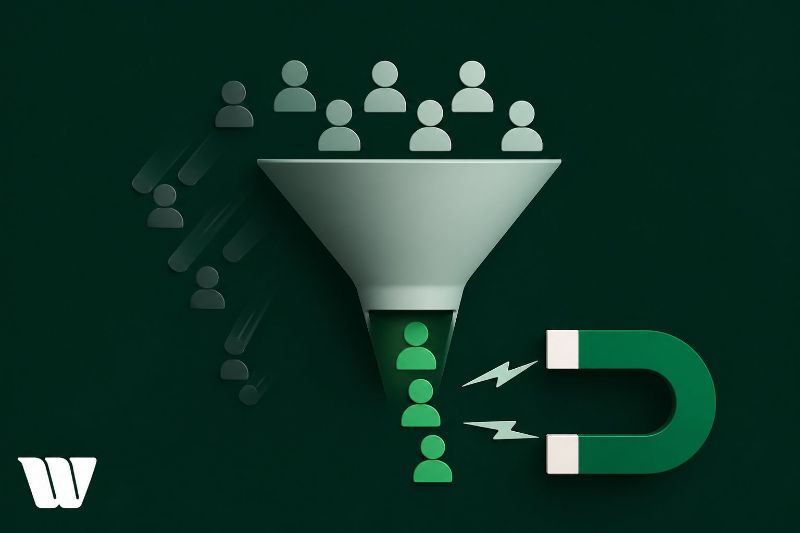
Churn rate measures the percentage of customers you lose over a set period—calculated by dividing lost customers by your starting customer count, then multiplying by 100. It matters because high churn signals problems like poor onboarding, weak retention strategies, or uncompetitive pricing. Catching warning signs early, like declining usage or missed renewals, lets you act before customers leave. Stick around, and you'll discover exactly how to calculate, predict, and reduce your churn rate effectively.
Key Takeaways
- Churn rate measures the percentage of customers lost during a period, calculated by dividing customers lost by starting customers, multiplied by 100.
- High churn signals underlying issues like poor onboarding, weak service quality, uncompetitive pricing, or stronger competitor offerings requiring immediate attention.
- Consistent measurement periods, whether monthly or quarterly, are essential for reliable data and meaningful comparisons across different timeframes.
- Early warning signs include declining login frequency, reduced feature usage, support escalations, and skipped renewals, enabling proactive retention interventions.
- Combining qualitative feedback with quantitative data signals provides a holistic understanding of churn, informing more effective reduction strategies.
What Is Churn Rate and Why Does It Matter?
Losing customers is inevitable — but losing them faster than you can replace them is a business problem you can't afford to ignore.
Churn rate measures the percentage of customers who stop using your product or service within a given period. It's a critical metric, especially in subscription models where recurring revenue drives growth.
High churn signals deeper issues — poor user experience, weak customer retention strategies, or declining service quality. It can reflect broader market trends or gaps exposed through competitive analysis.
Without proper feedback loops, you won't catch these warning signs early enough.
Tracking churn helps you prioritize loyalty programs, refine your offering, and make smarter decisions.
Understanding why customers leave is the first step toward keeping more of them.
How to Calculate Your Churn Rate Accurately
To calculate your churn rate accurately, you'll first need a clear formula: divide the number of customers lost during a period by the number of customers you'd at the start of that period, then multiply by 100.
Your choice of measurement period—whether monthly, quarterly, or annually—matters just as much as the formula itself, since different timeframes can paint very different pictures of your retention health.
Watch out for common errors like counting new customers acquired mid-period in your starting baseline, as this inflates your denominator and masks your true churn.
Defining Your Churn Formula
Before you can reduce churn, you need to measure it accurately—and that starts with choosing the right formula for your business. The most common approach divides customers lost during a period by your total customers at the start, then multiplies by 100.
But don't just default to that calculation without thinking critically about your churn metrics first.
If you're a subscription business, revenue churn might matter more than customer count. If you serve enterprise clients, losing one account hits differently than losing one small user. Aligning your formula with what actually drives growth makes your customer retention strategy far more actionable.
Pick a consistent method, apply it to the same time intervals, and track it regularly—that consistency is what transforms raw numbers into real insight.
Choosing Your Measurement Period
How often you measure churn shapes everything downstream—your alerts, your interventions, and your confidence in the numbers. Your measurement frequency depends on your business model and customer volume.
SaaS products with high transaction volumes benefit from monthly tracking, while enterprise models with long contracts often suit quarterly analysis duration better.
Mismatching your period to your business creates misleading spikes and valleys that trigger unnecessary panic or dangerous complacency. Monthly measurement works for most subscription businesses because it balances responsiveness with statistical reliability.
Avoid measuring too frequently—weekly churn rates amplify noise rather than signal. Stick to a consistent cadence, document it clearly, and never switch periods mid-analysis without adjusting your historical comparisons.
Consistency transforms raw churn figures into trustworthy trend lines you can actually act on.
Avoiding Common Calculation Errors
Once you've locked in a consistent measurement period, the next place churn calculations quietly break down is in the math itself. Common calculation pitfalls include using different formula variations across teams, creating reporting discrepancies that distort your actual retention picture.
Watch for these analysis mistakes:
- Starting customer count confusion: Always use customers at the period's start, not an average.
- Data inconsistencies: Confirm your CRM and billing system reflect the same cancellations.
- Measurement confusion: Distinguish between customer churn and revenue churn—they're separate metrics.
Standardize one formula across every team touching your data. Document it clearly.
When stakeholders pull churn numbers independently and arrive at different figures, that's a process problem, not a math problem. Consistency eliminates the noise and makes your churn data genuinely actionable.
What's a Good Churn Rate in Your Industry?
Churn rate benchmarks vary widely depending on your industry, so comparing your numbers to the wrong standard can give you a false sense of security or unnecessary alarm.
Industry benchmarks differ considerably: SaaS subscription models typically target 5–7% annual churn, while e-commerce and media businesses often see higher rates. Use competitor analysis to understand where your peers stand before drawing conclusions about your own performance.
Customer expectations also shape what's acceptable. B2B companies tend to retain clients longer, making even 2–3% annual churn concerning. B2C businesses face higher natural turnover.
Research industry-specific reports from sources like Recurly or Baremetrics to find relevant benchmarks. Once you know your target range, you can prioritize meaningful improvements rather than chasing an arbitrary number.
Why Customers Churn and How to Spot the Warning Signs
Understanding why customers leave is the first step toward keeping them. Churn rarely happens without warning — it builds through unmet expectations, poor onboarding experience, or declining user engagement over time.
Common triggers include weak service quality, uncompetitive pricing strategy, and growing competitor influence. Sometimes customers simply feel undervalued or unsupported after the sale.
Watch for these warning signs:
- Declining usage — reduced logins or feature adoption
- Support escalations — repeated complaints signal frustration
- Skipped renewals — hesitation around billing cycles
- Negative feedback — feedback analysis reveals dissatisfaction early
You should also monitor market trends and shifting customer loyalty patterns that may expose vulnerabilities in your offering.
Spotting these signals early gives you a real opportunity to intervene, adjust, and retain customers before they walk away.
How to Use Customer Data to Predict Churn Before It Happens
Predicting churn before it happens means turning raw customer data into actionable insight — and you don't need a data science team to get started.
Focus on engagement metrics like login frequency, feature usage, and support ticket volume. These behavior patterns often reveal churn predictors weeks before a customer actually leaves.
Use customer segmentation to group users by lifetime value and risk factors. This helps you prioritize retention strategies where they matter most.
Predictive analytics tools can then flag accounts showing declining activity, so you're acting proactively rather than reactively.
Start small — track two or three key signals consistently. Once you identify what "healthy" engagement looks like, spotting deviation becomes straightforward.
Data doesn't just tell you what happened; it tells you what's about to happen.
6 Proven Strategies to Reduce Your Churn Rate
Ultimately, everything connects back to value perception.
When customers consistently see how your product solves their problems, leaving becomes the harder choice.
How to Tell If Your Churn Rate Reduction Is Actually Working
Once you've rolled out churn reduction strategies, how do you know they're actually moving the needle? Start by tracking retention metrics weekly and comparing cohort comparisons across different customer groups. Are newer cohorts staying longer than older ones? That's a strong signal.
Monitor churn indicators like declining login frequency or reduced feature usage through engagement analysis. These early warning signs reveal whether your efforts are genuinely sticking.
Collect customer feedback through satisfaction surveys to understand sentiment shifts, and watch subscription trends for stabilization or growth patterns. If you've introduced loyalty programs, measure redemption rates alongside renewal data.
Don't rely on a single number. Combining qualitative and quantitative signals gives you a complete, honest picture of whether your churn reduction work is actually delivering real, lasting results.
Frequently Asked Questions
How Does Churn Rate Differ From Retention Rate in Practical Terms?
You're measuring opposite sides of the same coin. Churn rate tracks customers you're losing due to churn factors, while retention rate measures those you're keeping. Your retention strategies directly lower churn, improving both metrics simultaneously.
Can Seasonal Trends Cause Temporary Churn Spikes That Skew Annual Data?
Yes, seasonal trends can absolutely spike your churn temporarily, skewing annual data. You'll want to use seasonal analysis to separate these patterns and leverage churn prediction models to distinguish genuine loss from expected, cyclical customer behavior.
Should Startups Prioritize Reducing Churn Over Acquiring New Customers First?
You should prioritize reducing churn first. Losing existing customers undermines your growth strategy before it gains momentum. Focus on building customer loyalty early—it's more cost-effective and your data will reflect sustainable, meaningful growth rather than misleading acquisition numbers.
How Does Involuntary Churn From Failed Payments Get Tracked and Recovered?
You can track payment failures through automated billing alerts and retry logic. Your recovery strategies should include smart dunning emails, flexible payment retries, and real-time card updaters—these tools actively recapture lost revenue before customers fully churn.
Does Offering Refunds to Leaving Customers Negatively Impact Overall Churn Metrics?
Offering refunds doesn't always hurt your churn metrics. While refund impact can inflate short-term costs, it improves customer perception, reducing negative reviews. You'll often retain goodwill, potentially lowering future churn through referrals and brand trust.
Conclusion
Reducing churn isn't a one-time fix — it's an ongoing commitment to understanding your customers better. You've now got the tools to measure it accurately, spot warning signs early, and implement strategies that actually move the needle. Keep watching your data, listening to your customers, and refining your approach. Every customer you retain represents real revenue and a relationship worth protecting. Start with one strategy today and build from there.