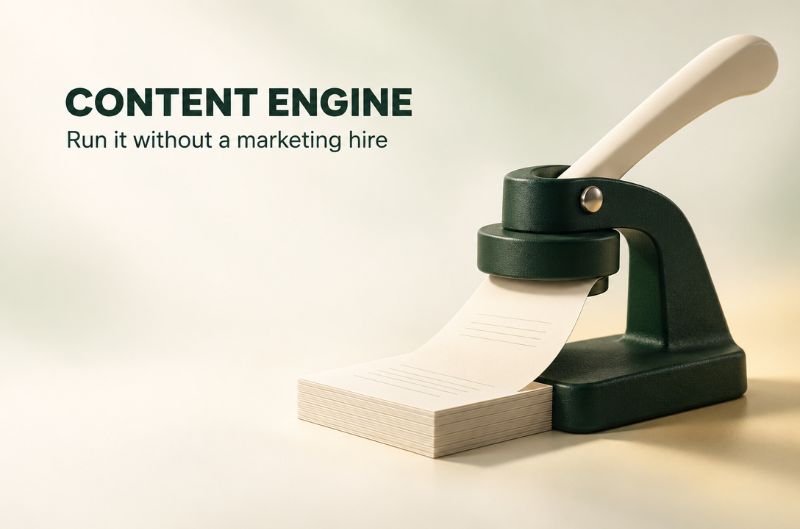
To build a content engine without a marketing hire, you need a repeatable system, not more effort. Start with one content pillar, build a topic bank, and create a simple three-stage workflow: Draft, Edit, Publish. Batch your work, use tools like Buffer or Notion to automate and organize, and protect your content time like a client meeting. The full system is closer than you think.
Key Takeaways
- Anchor your content strategy to one core pillar before expanding, ensuring focus and depth without spreading efforts too thin.
- Implement a three-stage Draft, Edit, Publish workflow and batch tasks on dedicated days to maximize efficiency.
- Use tools like Buffer or Zapier to automate scheduling, reposting evergreen content, and tracking weekly engagement metrics.
- Document clear task expectations, define ownership, and establish feedback loops before delegating any content responsibilities.
- Treat weekly content tasks as non-negotiable calendar commitments, including brainstorming, audience feedback review, and scheduling.
Why Your Content System Breaks Before It Starts
Most content systems don't fail because of bad writing — they fail because they were never actually systems to begin with. You start with good intentions — a loose content strategy, maybe a half-built content calendar — but without clear resource allocation, it collapses under its own weight.
Here's what actually breaks it: no defined brand voice, no audience targeting framework, and zero feedback loops to tell you what's working. You publish, you guess, you move on. Engagement metrics go unchecked. SEO optimization becomes an afterthought. Performance analysis never happens consistently enough to matter.
Without team collaboration built into the workflow, every piece of content becomes a one-off effort instead of a compounding asset. You're not building — you're just producing. Unlike a true content engine, one-off posts create temporary traffic spikes without a reinforcing structure that builds topical authority over time.
A real content engine requires deliberate structure before the first word gets written. Fix the system first, then fill it with content.

Start With One Content Pillar, Not Ten
The fix starts before your content calendar, before your brand voice doc, before any of it — it starts with one content pillar.
Most solo operators fail because they try to cover too much ground too fast. Ten topics, seven formats, four platforms. Nothing gains traction because nothing gets depth.
Your foundational strategy should anchor everything to a single content focus — the one problem you solve better than anyone else. That's your pillar. Every piece of content you create should connect back to it.
Pick the topic your best customers always ask about. The one you can speak to without prep, the one that drives real buying decisions. Build there first.
Once that pillar generates consistent engagement, you'll know what to expand into. But you can't discover that without the discipline of starting narrow.
Search engines evaluate content relevance across subject areas as a core signal of expertise, which means depth on one topic will always outperform shallow coverage across many.
One pillar. Owned completely. That's what builds momentum you can actually sustain.
Build a Topic Bank That Never Runs Dry
Once your pillar is locked in, you need a system for generating ideas — not a burst of inspiration that fades by Thursday. That's where a topic bank saves you.
Start with topic brainstorming sessions every month. Pull from audience interests, support tickets, sales call objections, and online forums. Use niche analysis to spot content gaps your competitors aren't addressing. Competitor insights reveal what's working — then you do it better.
Organize everything through content categorization: group ideas into buckets like how-to, myth-busting, case studies, and quick wins. Layer in seasonal themes and trending topics to stay timely without scrambling.
For idea generation that compounds, keep a running document — not a fancy tool, just somewhere searchable. Every time you spot a question, a complaint, or a theme exploration worth digging into, log it immediately. Each piece of content you produce is a touchpoint that can be optimized using A/B testing and analytics to reveal what resonates most with your audience and where engagement drops off.
A full topic bank means you never open a blank page wondering what to write next.
Build a Writing-to-Publishing Workflow You'll Actually Stick To
Having a topic bank full of ideas means nothing if those ideas never make it to publish. Your content strategy only works when you've got a repeatable system behind it.
Keep your workflow optimization simple with three stages:
- Draft – Write a rough version without editing. Get the idea out completely before you refine anything.
- Edit – Tighten the copy, add structure, and check that it delivers on its headline promise.
- Publish and distribute – Schedule it, push it live, and share it across your active channels.
The mistake most founders make is treating each piece like a one-off project. Instead, batch your work. Write four drafts in one sitting, edit them the next day, and schedule them all at once.
Pick one day a week for each stage. Block it on your calendar. Protect that time like a client meeting, and you'll actually ship. Tools like ChatGPT can automate writing workflows and cut production time significantly, freeing you to focus on strategy rather than execution.
Repurpose One Piece of Content Into Five Without Burning Out
Once you've got a solid piece of content, you don't need to start from scratch to show up everywhere—you need to slice it strategically. Pull the key insights from a long-form post and spin them into a short video script, a LinkedIn carousel, an email, and a quote graphic. Then automate the distribution so each format lands where your audience actually spends time, without you manually pushing it out every single day. As you build out these content formats, link between them strategically so that link equity flows toward your highest-converting assets and search engines can surface them more effectively.
Start With One Asset
Most creators burn out not from lack of ideas, but from treating every piece of content like it has to be built from scratch. Your content planning gets easier when you anchor everything to one strong asset.
Pick one format that matches your content goals and natural strengths:
- A long-form article that supports SEO and deep audience engagement
- A recorded video you can transcribe, clip, and repurpose across content types
- A detailed newsletter edition that doubles as your editorial calendar anchor
That single asset becomes your creative brainstorming foundation. From there, asset management is straightforward—you're not inventing, you're extracting. Track performance metrics on that core piece to understand what resonates before you multiply it into five. Consistent publishing from that one asset also signals relevance to search engines, increasing crawl frequency and indexing over time.
Slice It Strategically
With your anchor asset locked in, the next move is extraction—pulling five distinct pieces from the one you already built. Your content strategy shouldn't require starting from scratch every time. It requires a sharper lens.
Here's how you slice it: pull a key quote for social, convert a framework into a carousel, turn a section into a short-form video script, write an email that teases the main idea, and post a behind-the-scenes take on how you created it.
Each piece serves a different format and touchpoint, which strengthens audience engagement without multiplying your workload. You're not creating more—you're distributing smarter. One asset, five entry points. That's the engine working exactly the way it should. Layering in high intent keywords across your repurposed pieces also signals buyer interest early, shaping how you monetize that audience over time.
Automate The Distribution
Slicing your content means nothing if it sits in a draft folder. Automate the distribution so your system runs without constant babysitting. Use platform integration tools like Buffer or Zapier to handle content scheduling, social media automation, and email distribution simultaneously.
Here's how to make it stick:
- Set up automated reposting for evergreen content using analytics tracking to identify top performers
- Leverage audience targeting and content personalization to match each slice to the right platform
- Monitor engagement metrics and performance analytics weekly to cut what's not working
You're not chasing every channel—you're building smart pipelines. When your distribution runs on autopilot, you reclaim hours without sacrificing reach. That's the engine working for you.
How to Hand Off Content Tasks If You Bring in Help
When you're ready to bring in help, handing off content tasks without clear documentation is a fast track to chaos. You'll need to map out task expectations—who owns what, what "done" looks like, and what standards apply—so your team or contractors can execute without constant check-ins. Tools like Notion, Trello, or Loom let you build a delegation system that runs smoothly even when you're not in the room.
Documenting Clear Task Expectations
Bringing in help only works if the people you hire can actually do the work without pulling you back in to explain everything. Build clear guidelines before you assign anything.
Each task needs:
- A task template outlining the deliverable, format, and deadline tied to your project timelines
- Role assignments with defined performance metrics so everyone knows what success looks like
- Communication channels and feedback loops that keep work moving without bottlenecks
Accountability measures only stick when expectations are documented upfront. Don't assume your contractor reads minds. Write it down, share it before the first task, and refine it as you go. When your systems are tight, the right help actually frees you—instead of creating another management job you didn't sign up for.
Tools For Seamless Delegation
Three tools can make or break how smoothly you hand off content work: a project management platform, a shared asset library, and a standardized briefing system. Get your tool selection right, and delegation dynamics shift from chaotic to controlled.
Use tools like Notion or Asana to assign tasks, set deadlines, and track progress without chasing anyone down. Store brand assets, templates, and style guides in a shared folder—Google Drive or Dropbox works fine. Then build a brief template that travels with every task, so whoever picks it up knows exactly what's expected.
You don't need expensive software. You need systems your team can follow without asking you questions. The right tools eliminate guesswork and keep your content engine running even when you step away.
The Weekly Routine That Keeps Your Content System Running
A content engine doesn't run itself—it runs on habits. Without a repeatable weekly routine, even the best system breaks down. Block time each week for three non-negotiable tasks:
- Content brainstorming – Spend 20 minutes generating ideas based on what's relevant, trending, or overdue.
- Audience feedback review – Check comments, DMs, and analytics to see what's resonating and what's falling flat.
- Content scheduling – Load your queue so your team or tools can execute without waiting on you.
These three checkpoints keep your pipeline full and your output consistent. You don't need to spend hours managing this—you need to protect the time you do spend. Treat these blocks like client calls: non-negotiable and calendared. When your routine is locked in, your content engine shifts from something you manage reactively to something that runs predictably, week after week.
Frequently Asked Questions
How Do I Measure Content Performance Without Expensive Analytics Tools?
You don't need expensive software—track content metrics using free simple tools like Google Analytics and native platform insights. Monitor audience engagement, organic reach, and key performance indicators to refine your DIY analytics-driven content strategy through consistent data tracking.
Can I Build a Content Engine While Working a Full-Time Job?
Yes, you can! With smart time management and a lean content strategy, you'll batch-create on weekends, repurpose ruthlessly, and automate distribution. Consistent small actions compound fast—you don't need more hours, just better systems.
What Content Formats Work Best for Audience Growth in Year One?
Focus on blog posts for SEO, short video tutorials for engagement, and infographics impact your shareability fast. Repurpose each piece across social media to stretch your effort without burning out in year one.
How Long Before My Content Engine Starts Generating Real Business Results?
You'll typically see real business impact around months 6–9 of your content timeline. Stay consistent, track leads and conversions monthly, and you'll watch compounding results accelerate as your engine gains traction.
Should I Build an Email List Alongside My Content Engine From the Start?
Yes, build your email list from day one. Pair content planning with subscriber incentives, use automation tools for lead nurturing, apply segmentation tactics for audience engagement, and you'll accelerate growth strategies without needing extra hires.