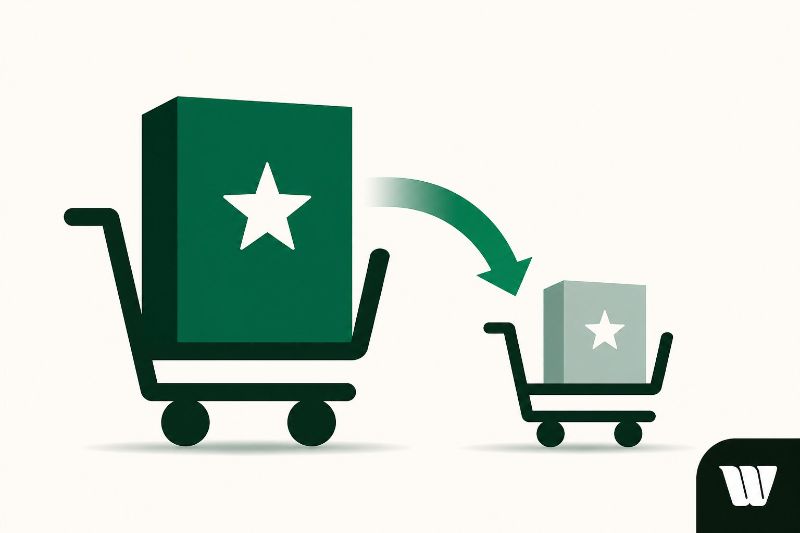
A downsell is a lower-priced or scaled-back alternative you offer a prospect immediately after they decline your main offer. Instead of walking away with zero revenue, you give hesitant buyers a second chance to say yes at a price point that fits their budget or commitment level. Done strategically, downsells can recover 20–30% of otherwise lost sales while building the trust that fuels future purchases. Keep going to discover exactly how to make them work.
Key Takeaways
- A downsell is a lower-priced or scaled-back alternative offer presented to a customer after they decline the primary sales offer.
- It targets reluctant buyers by addressing price or commitment objections that caused them to reject the original offer.
- Downsells are strategically placed immediately after the main offer is refused, when buying intent remains at its peak.
- Unlike upsells and cross-sells, downsells reduce friction and focus on converting hesitant prospects rather than willing buyers.
- Effective downselling can recover 20–30% of otherwise lost sales while building trust that supports future purchases.
What Is a Downsell in Marketing
When a prospect declines your primary offer, a downsell gives you a second chance to close the sale by presenting a lower-priced or scaled-back alternative. Rather than losing the customer entirely, you're meeting them where they're financially or psychologically.
Effective downsell strategies leverage customer psychology by recognizing that rejection doesn't always mean disinterest—it often signals a price or commitment objection. A well-timed downsell addresses that friction directly.
Consider the data: studies show businesses recover 20–30% of otherwise lost sales through strategic downselling. That's revenue you'd otherwise walk away from.
You're not compromising your brand by offering a downsell—you're demonstrating flexibility.
Done correctly, it builds trust, preserves the relationship, and positions you for future upsell opportunities.
How a Downsell Differs From an Upsell and Cross-Sell
To sharpen your sales strategy, you need to understand how downsells, upsells, and cross-sells each serve a distinct function.
Upsell strategies push customers toward a higher-priced or premium version of what they're already considering. Cross-sell techniques introduce complementary products to increase transaction value.
A downsell, however, moves in the opposite direction — it reduces friction by offering a lower-cost alternative when a customer hesitates or declines.
Think of it this way: upsells and cross-sells maximize revenue from willing buyers, while downsells recover revenue from reluctant ones.
Each tactic targets a different stage of buyer readiness. Upsells and cross-sells work when intent is strong; downsells activate when commitment wavers.
Knowing which tool to deploy — and when — determines whether you close the sale or lose it entirely.
Where the Downsell Lives in Your Sales Funnel
Your downsell belongs in three specific positions within your sales funnel: immediately after your main offer is rejected, strategically placed before a prospect abandons their cart, and embedded within your exit sequences.
Each placement targets a distinct moment of hesitation, giving you a structured opportunity to recover revenue that would otherwise walk out the door.
Position your downsell with precision, because where it appears determines whether it saves the sale or simply adds friction.
After the Main Offer
Placement matters more than most marketers realize, and the downsell has one correct home in your sales funnel: immediately after a prospect declines your main offer.
Timing is everything. Customer psychology shows that buying intent peaks right after a refusal — prospects haven't left yet, which means they're still engaged and evaluable. Waiting even a few minutes collapses that window.
Your pricing strategies must account for this sequencing. The downsell should appear as a direct, frictionless alternative — not a separate campaign launched days later.
Presenting it instantly leverages the existing emotional momentum and decision-making state your prospect is already in. Data consistently confirms that downsells placed elsewhere in the funnel convert at considerably lower rates, making proper positioning a non-negotiable strategic priority.
Before Cart Abandonment
When you detect these patterns, trigger a downsell offer proactively. Present a stripped-down version of your product, a payment plan, or a lower-tier option while the prospect is still engaged.
You're not waiting for them to leave; you're removing the obstacle that's keeping them from buying.
Data consistently shows that addressing price objections mid-session outperforms post-abandonment email recovery campaigns.
Acting on customer hesitation in real time keeps prospects inside your funnel instead of chasing them after they've already disconnected.
Within Exit Sequences
The most proven placement for a downsell isn't mid-session—it's inside the exit sequence, triggered the moment a prospect signals they're about to leave. This is where your exit strategy becomes a revenue recovery system rather than a final goodbye.
When someone initiates an exit, you've already lost the full sale—so your customer retention priority shifts to capturing partial value instead of nothing. Exit-triggered downsells convert at markedly higher rates than mid-funnel alternatives because they meet prospects at peak decision pressure.
You're not interrupting a browsing session; you're intercepting an abandonment decision. That psychological window is narrow but powerful.
Build your exit sequence around a single, stripped-down offer that removes the original objection—price, commitment, or complexity—before the prospect permanently disengages.
Why Businesses Use Downsells Instead of Walking Away
When a prospect says no to your primary offer, walking away means you've lost both the sale and every dollar that buyer could've generated over their lifetime.
A downsell lets you capture immediate revenue—even at a lower margin—while keeping that buyer inside your ecosystem where future upsells, cross-sells, and repeat purchases become possible.
You're not settling for less; you're protecting long-term customer value by prioritizing the relationship over a single transaction.
Retaining Revenue Over Nothing
Losing a sale doesn't have to mean losing the customer entirely. When a prospect declines your primary offer, walking away means earning zero revenue and gaining zero relationship equity. A downsell changes that equation immediately. By presenting a lower-priced alternative, you're converting an exit into a transaction, and that transaction matters more than it appears on the surface.
Studies consistently show that acquiring a new customer costs five times more than retaining an existing one. Downsells directly support revenue retention by keeping buyers inside your ecosystem rather than pushing them toward competitors.
Once someone purchases, even at a reduced price point, you've established trust. That trust becomes the foundation for customer loyalty, repeat purchases, and future upsell opportunities that far exceed the initial discounted transaction.
Building Long-Term Buyer Relationships
Every customer who walks away without buying represents a lost relationship, not just a lost sale. When you offer a downsell, you're investing in relationship nurturing that pays dividends far beyond the initial transaction.
Studies consistently show that acquiring a new customer costs five times more than retaining an existing one.
By accepting a lower-commitment offer, buyers enter your ecosystem. They experience your product, build trust in your brand, and become far more likely to upgrade later.
That's how buyer loyalty develops — through positive experiences, not pressure tactics.
A customer who purchases a $27 offer today can become your $2,000 client next year. Walking away earns you nothing.
Offering a strategic alternative keeps the relationship alive and positions your business for compounding long-term revenue growth.
Real-World Downsell Examples Across Different Industries
Downsells appear across virtually every industry, and studying how top brands execute them reveals repeatable patterns you can adapt to your own offers.
In real estate, agents pivot buyers to lower-priced listings when budgets tighten.
Software subscriptions offer stripped-down free tiers when users cancel premium plans.
Retail clothing brands suggest budget-friendly alternatives when premium items sit abandoned in carts.
Online courses downgrade full programs to single modules at reduced prices.
Travel packages replace full resort bundles with room-only bookings.
Digital products convert declined full memberships into single-purchase downloads.
Fitness programs swap annual memberships for monthly plans when commitment hesitates.
Automotive sales teams present certified pre-owned vehicles after new-car resistance emerges.
Each example shares one principle: meet the buyer exactly where their budget currently sits.
How to Build a Downsell Offer That Actually Converts
Seeing how top brands deploy downsells across industries gives you a blueprint, but execution is where most marketers lose the conversion.
Start with effective pricing—your downsell must feel like genuine relief, not desperation. Use customer feedback to identify what objections killed the original sale, then rebuild your value proposition around removing those barriers.
Activate emotional triggers by framing the downsell as a smarter decision, not a lesser one. Deploy targeted messaging that speaks directly to the hesitating buyer's specific concern.
Consider product bundling to increase perceived value without raising the price point. Apply urgency tactics carefully—manufactured scarcity destroys trust.
Above all, prioritize clear communication. Buyers who understand exactly what they're getting, and why it benefits them, convert. Confusion never does.
Downsell Mistakes That Drive Customers Away for Good
What separates a downsell that saves a sale from one that permanently kills the relationship often comes down to avoidable execution errors.
When you ignore downsell psychology, you risk triggering negative customer perception that erodes trust instantly. Presenting a downsell too aggressively signals desperation rather than value. Offering a stripped-down product without clearly communicating its benefits makes customers feel punished for declining.
Timing errors matter equally—deploying a downsell before the customer has genuinely rejected your primary offer feels manipulative. Discounting too steeply also damages brand credibility and trains buyers to always wait for lower prices.
You should never make the downsell experience feel transactional and hollow. Each misstep compounds the damage, turning a recoverable moment into a permanent opt-out and an unsubscribe.
Frequently Asked Questions
Can Downsells Negatively Impact Your Brand's Perceived Value Over Time?
Yes, downsells can hurt your brand perception if you're not strategic. Overusing them signals low confidence in your premium offerings, eroding customer loyalty and training buyers to always expect cheaper alternatives before committing.
Should Downsell Offers Be Presented Automatically or Triggered Manually by Sales Reps?
You should use both automated triggers and manual sales strategies together. Let automated triggers handle initial declines, but empower your reps to intervene when data signals high-value recovery opportunities requiring personalized outreach.
How Do You Track and Measure the Long-Term Revenue Impact of Downsells?
Track downsell impact by monitoring customer lifetime value over time and integrating conversion data into your revenue forecasting models. You'll measure retention rates, upsell progression, and incremental revenue gains to assess each downsell's true long-term contribution.
Are There Legal or Ethical Considerations When Presenting Downsell Offers to Customers?
Yes, you must prioritize customer consent and ethical transparency when presenting downsell offers. Clearly disclose pricing, terms, and limitations. Avoid manipulative tactics, as deceptive practices violate consumer protection laws and strategically damage long-term customer trust and retention rates.
Can Downsells Be Effectively Used in B2B Sales Environments?
Yes, you can effectively leverage downsell strategies in B2B sales environments. They'll strengthen customer retention by offering scaled-down solutions that align with tighter budgets, keeping prospects engaged and building long-term relationships that drive future upsell opportunities.
Conclusion
A downsell isn't admitting defeat—it's a strategic move that keeps revenue flowing when buyers hesitate. Done right, it converts fence-sitters into paying customers, preserves lifetime value, and protects your acquisition costs. The data's clear: recovering even a fraction of lost sales compounds greatly over time. Build your downsell with intention, and you'll turn what was a dead end into a profitable entry point.