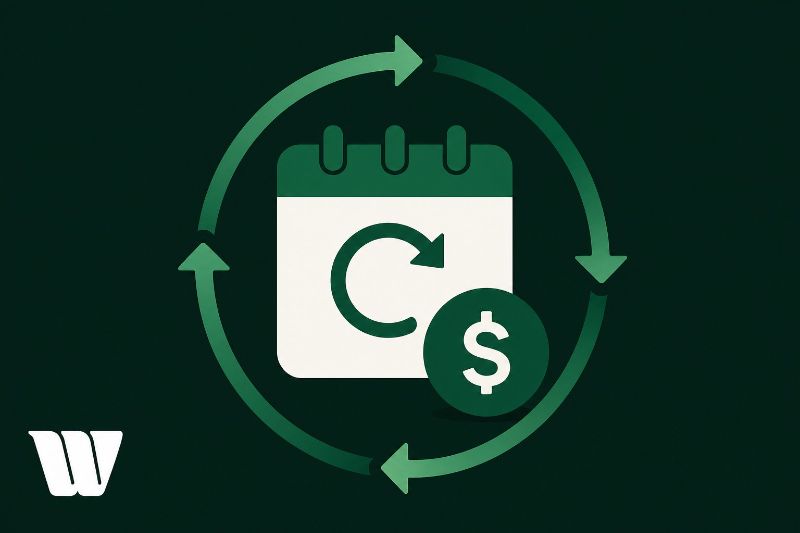
Recurring revenue is the portion of your company's income that repeats at predictable intervals — monthly, quarterly, or annually. It's what separates businesses with stable, forecastable cash flow from those constantly restarting their revenue engine. Subscription fees, retainer contracts, auto-renewal licenses, and usage-based billing all generate recurring revenue. Companies built on this model attract stronger investor confidence and command valuations up to 8x higher than transactional businesses. Keep going to see exactly how it works.
Key Takeaways
- Recurring revenue is income a business reliably collects at regular intervals, such as monthly or annually, reflecting sustained customer loyalty.
- Subscription-based models, contracts, auto-renewal licenses, and usage-based billing are the most common recurring revenue types.
- Unlike one-time sales, recurring revenue provides predictable cash flow, enabling accurate forecasting and smarter resource allocation.
- Examples include Netflix subscriptions, SaaS software licenses, retainer agreements, and utility-style usage-based billing arrangements.
- Businesses with strong recurring revenue attract higher investor valuations due to their financial stability and compounded customer retention.
What Is Recurring Revenue?
Recurring revenue is the portion of a company's income that's expected to continue at regular intervals—monthly, quarterly, or annually—with a high degree of predictability. Unlike one-time sales, it reflects sustained customer loyalty and provides businesses with a reliable financial foundation.
When you analyze a company's financial health, revenue predictability becomes a critical metric. Predictable income streams allow you to forecast cash flow accurately, allocate resources efficiently, and make informed long-term strategic decisions.
Investors and stakeholders consistently assign higher valuations to businesses with strong recurring revenue models because they signal stability and reduced financial risk.
Subscription services, maintenance contracts, and licensing agreements are common structures that generate this type of income, each reinforcing a company's capacity to sustain operations and scale growth confidently.
The Main Types of Recurring Revenue
While recurring revenue takes many forms, four primary models dominate modern business structures: subscription-based revenue, contracts and retainers, auto-renewal licenses, and usage-based billing.
Subscription models generate predictable cash flow by charging customers fixed fees at regular intervals—monthly or annually.
Contracts and retainers lock clients into defined service agreements, delivering consistent revenue stability over extended periods.
Auto-renewal licenses automatically extend software or platform access, reducing churn and administrative overhead simultaneously.
Usage-based billing scales revenue directly with customer consumption, aligning your earnings to actual product engagement.
Each model carries distinct advantages depending on your industry, customer base, and growth strategy.
Understanding these structures helps you select the right approach for building dependable, long-term revenue streams that support accurate financial forecasting and sustainable business growth.
How Businesses Collect and Manage Recurring Payments
Once you've established a recurring revenue model, you'll need reliable payment collection methods—ranging from credit card auto-billing and ACH transfers to digital wallets and invoicing platforms—to keep cash flow predictable.
Each method carries distinct processing fees, failure rates, and customer preferences, so you'll want to match your collection approach to your target market's behavior and your margin requirements.
Behind these methods, you'll also need a billing management system capable of handling subscription cycles, failed payment retries, proration, and compliance requirements without manual intervention.
Payment Collection Methods
Businesses rely on several core payment collection methods to manage recurring revenue streams, each carrying distinct trade-offs in cost, reliability, and customer friction.
Credit and debit cards dominate subscription payment processing, offering broad customer reach but carrying higher failure rates due to expiration and fraud-related declines.
ACH bank transfers deliver lower transaction costs and stronger payment processing reliability, though they're slower to settle.
Digital wallets like PayPal and Apple Pay reduce friction, supporting customer retention by minimizing checkout abandonment.
Direct debit agreements give businesses stronger collection control, particularly valuable in B2B contexts.
You'll want to evaluate each method against your churn risk, average transaction size, and customer demographics, since no single approach effectively serves every recurring revenue model simultaneously.
Managing Recurring Billing Systems
Managing recurring billing systems requires more than selecting the right payment method—you need infrastructure that automates charge cycles, handles failures, and maintains accurate subscription records at scale.
Billing automation eliminates manual processing errors, reduces operational overhead, and directly supports customer retention by ensuring seamless, uninterrupted service delivery.
Key capabilities your billing system must support:
- Automated retry logic — reschedules failed payments using smart timing intervals to recover revenue without manual intervention
- Dunning management — sends automated notifications before and after failed charges, reducing involuntary churn
- Real-time subscription tracking — maintains accurate billing cycles, plan changes, and cancellation records across your entire customer base
Without these components, billing failures silently erode revenue and damage customer trust, making robust system infrastructure non-negotiable for sustainable recurring revenue growth.
Recurring Revenue Examples Across Industries
Recurring revenue models appear across diverse industries, each adapting the core concept to fit its unique customer base and value proposition.
You'll find software subscription services like Microsoft 365 generating predictable monthly or annual fees, while healthcare membership models—such as direct primary care practices—charge flat monthly rates for ongoing patient access.
Media streaming platforms like Netflix and Spotify further demonstrate how recurring revenue scales efficiently, converting large audiences into stable, measurable income streams.
Software Subscription Services
Software subscription services represent one of the most scalable recurring revenue models available, with companies like Microsoft, Adobe, and Salesforce having demonstrated this through dramatic revenue transformations.
When you adopt this model, you're securing predictable cash flow while delivering continuous value through software updates and feature enhancements that drive customer retention.
Key advantages you'll observe include:
- Predictable ARR growth: Salesforce exceeded $31 billion in annual recurring revenue in 2023
- Lower churn rates: Continuous software updates keep users engaged and reduce cancellations
- Upsell opportunities: Tiered pricing structures allow you to expand revenue per existing customer
Adobe's shift from perpetual licensing to Creative Cloud subscriptions increased its revenue predictability considerably, validating why software companies increasingly prioritize subscription-based models over one-time purchases.
Healthcare Membership Models
Healthcare membership models have emerged as one of the most compelling recurring revenue structures outside of technology, combining predictable cash flow with improved patient outcomes.
Direct primary care (DPC) practices exemplify this model, charging patients monthly fees between $50–$150 for unlimited primary care access. You'll find that practices using this structure report 30–40% higher patient engagement compared to traditional fee-for-service arrangements.
These models succeed because they bundle value added services—lab work, telehealth consultations, and preventive screenings—into a single predictable payment.
Providers benefit from reduced administrative overhead by eliminating insurance billing complexity, while patients receive transparent, accessible care.
Concierge medicine practices generate annual membership revenue exceeding $100,000 per physician, demonstrating that healthcare recurring revenue can achieve both financial sustainability and superior clinical outcomes simultaneously.
Media Streaming Platforms
Media streaming platforms represent perhaps the most visible proof point for recurring revenue's transformative power, with Netflix generating $33.7 billion in subscription revenue in 2023 alone.
These platforms leverage content accessibility and user engagement to lock in predictable monthly or annual payments.
Key metrics driving their success include:
- Churn rate optimization: Netflix maintains a sub-2% monthly churn rate through personalized recommendations
- Tiered pricing structures: Spotify offers free, Premium, and Duo plans, capturing diverse consumer segments
- Content exclusivity: Original programming increases perceived value, justifying subscription retention
You'll notice these platforms continuously reinvest recurring revenue into content creation, fueling a self-sustaining growth cycle.
Their model proves that when you prioritize consistent value delivery, subscribers willingly commit to long-term payment relationships.
Why Recurring Revenue Beats One-Time Sales
When you compare business models side by side, recurring revenue consistently outperforms one-time sales across nearly every financial metric that matters.
Subscription-based companies carry higher valuations, attract stronger investor confidence, and demonstrate measurable revenue stability that transactional businesses simply can't replicate.
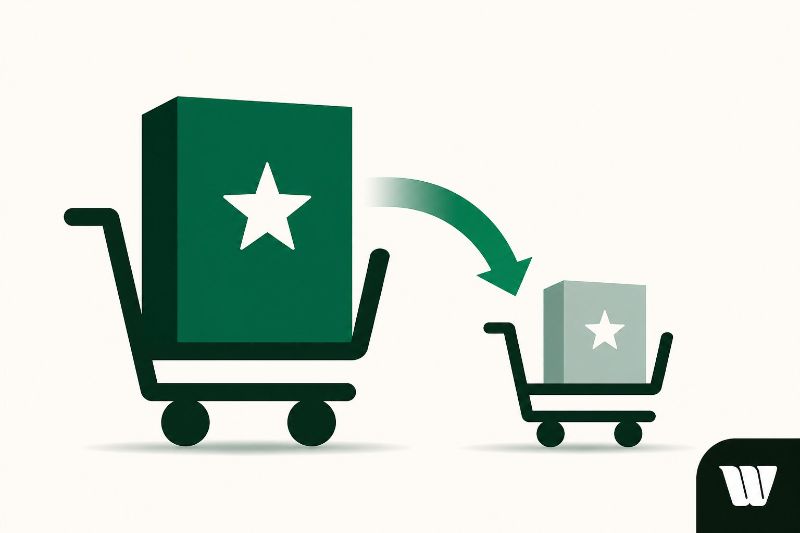
With one-time sales, you're constantly restarting your revenue engine.
With recurring revenue, you're building on an existing foundation. Each billing cycle compounds your customer loyalty and deepens your relationship with buyers who've already committed to your product.
Data consistently shows that acquiring a new customer costs five times more than retaining an existing one.
Recurring models leverage retention as a growth mechanism. You spend less, predict more, and scale faster.
That structural advantage explains why subscription businesses dominate modern markets across virtually every industry vertical.
Why Recurring Revenue Is Harder to Build Than It Looks
The advantages of recurring revenue are real, but building a model that actually delivers them is considerably harder than most founders anticipate.
Customer loyalty isn't automatic—you're competing for retention against rising market competition and shifting customer expectations.
Key challenges you'll likely face:
- Revenue predictability breaks down when churn exceeds acquisition, making pricing strategies critical from day one.
- Service scalability demands infrastructure investment before revenue justifies it, straining early-stage cash flow.
- Customer retention requires continuous value delivery—subscribers cancel the moment perceived value drops below perceived cost.
You can't build recurring revenue once and walk away.
It demands ongoing product refinement, competitive positioning, and proactive churn management.
The model rewards discipline; it punishes complacency with compounding revenue losses that accelerate faster than most operators expect.
Frequently Asked Questions
How Does Recurring Revenue Affect a Company's Overall Valuation?
Recurring revenue boosts your company's valuation by improving revenue stability, making it more predictable. Investors apply higher valuation metrics, like revenue multiples, because you're demonstrating consistent cash flows, reducing risk and increasing long-term financial attractiveness.
What Tax Implications Should Businesses Consider With Recurring Revenue Models?
You'll need to carefully manage revenue recognition timing, as deferred income impacts taxable periods differently. Your tax treatment varies based on subscription length, jurisdiction, and accrual methods, directly affecting cash flow and liability reporting accuracy.
Can Small Businesses Realistically Compete With Large Subscription-Based Companies?
Yes, you can compete by leveraging niche subscription strategies that large companies can't easily replicate. Your competitive advantages lie in personalized service, community-building, and targeted customer relationships that data shows drive stronger retention rates.
How Do Customer Refunds Impact Recurring Revenue Reporting and Forecasting?
Refund adjustments directly reduce your recognized recurring revenue, distorting MRR and ARR metrics. You'll need to apply accurate revenue recognition practices to reflect net figures, ensuring your forecasts account for historical refund rates and churn patterns.
What Legal Contracts Are Typically Required for Recurring Revenue Agreements?
You'll typically need subscription agreements, service-level agreements (SLAs), and master service agreements (MSAs). These documents establish clear contract terms, define revenue guarantees, and protect both parties by outlining payment schedules, renewal conditions, and termination clauses.
Conclusion
Recurring revenue isn't just a billing preference—it's a strategic foundation that separates scalable businesses from stagnant ones. You've seen how subscription models, retainers, and usage-based contracts create predictable cash flow, higher customer lifetime value, and stronger valuation multiples. But you've also seen the trade-offs: churn management, acquisition costs, and operational complexity. If you're building for long-term growth, recurring revenue isn't optional—it's the architecture your business model needs.