Generative AI has accelerated the pace at which entrepreneurs can turn ideas into reality. Tools now exist that will build websites, write code, run marketing campaigns and even manage a business. Two of the most ambitious platforms—Willo and Manus—often appear in the same conversations but they solve different problems. Willo positions itself as an AI business builder that operates like an autonomous startup team, while Manus describes itself as a multi‑agent app‑building suite with browser automation and design tools. Understanding their scope, strengths and trade‑offs will help founders choose the right platform for their goals.
Willo: A System for Building and Running a Business
What Willo is and does
Willo takes a vision and turns it into a functioning business. Users can simply describe their idea and Willo assembles an AI team that builds, runs and grows the business. The platform automatically performs market research, builds a website, sets up infrastructure and starts a growth engine. It deploys a complete stack—from payment processing via Stripe to a custom‑coded site hosted on GitHub and cloud infrastructure, analytics and growth tools, and transactional email. In other words, Willo is not just a website builder; it is an operating system for a startup.
Autonomous agents working together
Instead of a single model doing everything, Willo uses multiple AI agents—CEO, Product, Research, Marketing, Content, Support and Finance. Each agent specialises in a domain: the CEO agent sets strategy, the Product agent builds the website and code, the Research agent analyses competitors and opportunities, the Marketing agent runs campaigns, the Content agent writes SEO‑optimised articles, the Support agent handles customer inquiries and the Finance agent manages revenue and spending. These agents coordinate through weekly plan–execute–reflect cycles: they draft goals, execute tasks, analyse results and adjust strategies accordingly. This continuous loop means the business does not stagnate; it learns and improves over time.
Key features at a glance
- Full‑stack automation: Willo builds and hosts the website, configures payments, creates content and launches marketing without manual coding.
- Autonomous agents: Seven specialised agents handle strategy, product, research, marketing, content, support and finance.
- Growth engine: The platform runs weekly cycles of planning, executing and reflecting to continually drive growth.
Why Willo is special
Many platforms promise to help you build a website or generate content, but few aim to manage an entire business. Willo’s multi‑agent architecture means tasks that normally require human teams—such as market research, content creation, campaign management and financial oversight—run autonomously. This makes Willo particularly attractive for solo founders or small teams who want to focus on their vision rather than operational details. By providing a complete infrastructure from day one and continuously executing growth strategies, it reduces the friction between idea and execution.
Who should use Willo
Willo is well‑suited for entrepreneurs who want to launch online businesses without hiring developers or marketers. It can be useful for content creators who need a platform and growth engine, coaches or consultants who need a professional site with lead capture, and e‑commerce sellers who require payments and marketing. Because it handles ongoing operations, it works best for those who value automation over custom code control.
Limitations and considerations
Although Willo removes much of the complexity, it is still a generalised system. Users who need highly bespoke workflows or deep customisations may find it limiting. The platform currently runs its operations autonomously, which means founders must trust the AI’s decisions or manually intervene. Additionally, because it aims to be an all‑in‑one solution, users are tied into its ecosystem; exporting and migrating to another system could be more complex than using modular tools.
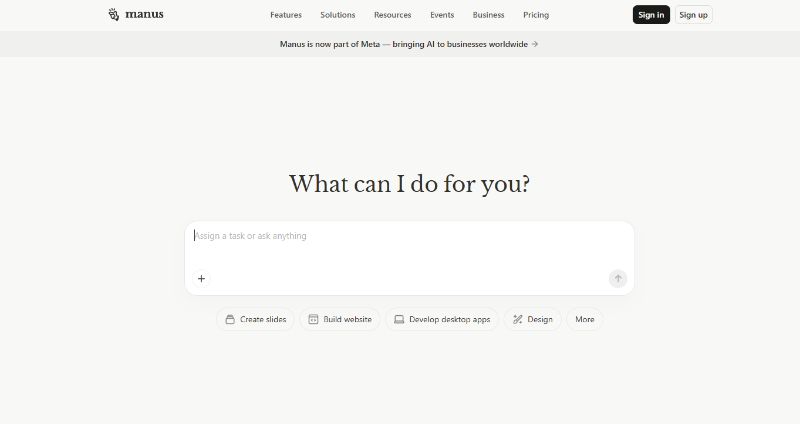
Manus: A Multi‑Agent App Builder With Browser Automation
What Manus is and does
Manus markets itself as an agentic platform that builds full‑stack applications from plain‑language prompts. The mobile‑app builder page emphasises that users can create a mobile app “in minutes by describing what they want”; the AI then builds the entire application—front‑end, back‑end and database—while providing a real‑time preview and allowing one‑click deployment. The generated app supports native device features like touch gestures, camera and notifications, and users can install or share it with a single click. A similar web app builder promises to launch business applications without engineering resources and includes built‑in integrations for LLMs, Stripe, image generation, maps and notifications. Users prompt the system, watch it build, and then launch the app with analytics and lead capture tools.
Multi‑agent development and customization
Unlike simple drag‑and‑drop builders, Manus uses multiple AI agents to handle architecture, coding, testing and deployment. A review of the platform notes that these agents collaborate to build web and mobile apps from prompts, image references or voice. Users can choose to build a full‑stack app, mobile app or landing page; upload images or link a GitHub repository; select the language model (such as Claude Opus, GPT or Gemini) and set a credit budget. During the build process, Manus displays each step—breaking down prompts, generating images, installing dependencies, running tests—and it can self‑diagnose issues and ask clarifying questions.
Expanded feature set
Manus is more than an app builder; it includes tools for design, automation and AI assistance:
Mobile and web app builders
The mobile app builder covers categories such as on‑demand services, social networking, health and fitness, e‑commerce and productivity. Apps come with features like real‑time tracking, payments, notifications, user profiles and messaging, and they can be edited across devices. The web app builder includes built‑in AI features such as chatbots, content generation, SEO tools, file storage and voice‑to‑text.
AI design tool
Manus offers an AI design generator that produces visuals (images, videos and 3D assets) informed by research and brand context. Users can edit any object on an interactive canvas, swap backgrounds and apply advanced compositing, while the AI handles text overlay and scene adjustments. Compared with other AI design tools, Manus emphasises editable outputs, integrated research and context awareness. The tool is marketed to marketing teams, creative agencies and founders who need fast, high‑quality visuals.
Browser operator and automation
Manus’s browser operator connects the user’s browser to its agent so it can perform tasks using the user’s IP and active tabs. The agent can plan and execute multi‑step tasks—such as filling out forms, navigating websites, extracting data or booking logistics—without supervision. This capability moves beyond app building into general autonomous task execution.
Strengths and weaknesses
Independent reviews highlight Manus’s advantages and limitations. On the positive side, Manus supports multi‑agent orchestration to build full‑stack and mobile apps, offers real‑time previews and deploys to production in one click. It integrates GitHub, exports full code, supports large context windows and team collaboration, and has third‑party integrations with services like Shopify and Webflow. However, the platform consumes credits quickly for iterative builds, output quality varies with complex architectures and rebuilds can take several minutes. The browser automation features are powerful but can be fragile; tasks may fail if websites change. Another review notes that Manus currently lacks persistent memory, collaboration features and integration with tools like Slack or Gmail; each session starts fresh and the platform is invite‑only, limiting access.
Who Manus is for
Manus is designed for founders who want to quickly prototype or launch apps without writing code. Start‑ups building minimum viable products, internal tool developers and product managers looking for fast prototypes are ideal users. The platform also appeals to marketers and creative teams who need visuals and browser automation. Those who enjoy controlling the development process may appreciate the ability to export code and integrate with GitHub.
Limitations and considerations
Despite its impressive feature set, Manus’s autonomy can also be a drawback. The lack of persistent memory means agents cannot learn from past sessions, and there is no built‑in collaboration for teams. Access is currently gated by a waitlist, and without direct integrations, all tasks must run through the browser, which can be brittle. Businesses with strict compliance or custom requirements may prefer frameworks that offer more control over code and infrastructure.
Key Differences Between Willo and Manus
Scope: business operations vs app building
Willo takes a holistic view of building a company. It handles research, branding, product development, marketing, customer support and finances through specialised agents, effectively acting as a lean start‑up team. Manus, by contrast, focuses on building digital products—web and mobile apps—and augmenting workflows with design and browser automation. Manus helps you build the tool; Willo helps you run the business around that tool.
Automation vs assistance
Both platforms rely on AI agents, but they deploy them differently. Willo’s agents operate autonomously and continuously; they plan, execute and refine tasks without user prompts, enabling long‑term business growth. Manus’s agents, while powerful, often require discrete prompts: you ask for an app, design or task, the system builds it, then returns control to you. This model is more like an assistant than an ongoing operator.
Infrastructure and lock‑in
Willo provides a complete infrastructure (hosting, payments, analytics) out of the box. Users trade flexibility for convenience, staying within Willo’s ecosystem. Manus emphasises code export and GitHub integration, giving users more freedom to move projects elsewhere or integrate with existing stacks. For founders concerned about vendor lock‑in or who plan to hire developers later, Manus’s exportability is attractive.
Use‑case focus
If the goal is to launch a content‑driven business or service—blog, coaching, digital product, or SaaS—Willo’s end‑to‑end operation and growth engine provide a turnkey solution. If the goal is to build and test an app quickly, iterate on features and possibly take the code in‑house, Manus’s app builders and code export are more appropriate. Manus also appeals to agencies and marketers seeking design and browser automation tools, whereas Willo is designed for single‑brand businesses.
Pricing and access
Manus operates on a credit system, with a free plan offering limited credits and paid plans scaling to hundreds of credits per month. The platform is currently invite‑only. Willo’s pricing model is easy to follow, with three distinct plans, Starter, Growth, and Scale, each providing set resources and capabilities. The Starter tier includes foundational tools like strategy generation, agent runs, and a deployed site. Growth builds on this with automation and revenue-focused features, including marketing systems and integrations, while Scale unlocks increased capacity, priority execution, and enhanced analytics for more advanced operations.
When to Choose Each Platform
Use Willo if you want:
- End‑to‑end business automation: Willo handles market research, website creation, payments, content, marketing, support and financial tracking.
- Continuous growth: The agents run weekly cycles to drive traffic and conversions without ongoing prompts.
- A single system: If you prefer not to manage multiple tools or hire contractors, Willo’s integrated stack reduces overhead.
Use Manus if you want:
- Rapid app development: Build web and mobile apps from natural language prompts, choose from different models, and export the code.
- Control over code: Use GitHub integration and full code export to retain ownership and move between platforms.
- Browser and design automation: Automate research, data extraction and bookings, and generate editable visuals for marketing.
Conclusion
Willo and Manus represent two distinct approaches to applying AI to entrepreneurship. Willo acts like a virtual team that builds and runs a business end‑to‑end, making it ideal for founders who want to focus on product vision and strategy while leaving execution to machines. Manus acts more like an autonomous workshop: it can generate apps, designs and even perform online tasks, but it stops short of running the entire business on its own. For entrepreneurs deciding between them, the key is to identify whether you need a persistent system to manage your business or a suite of tools to accelerate development and automation. Both platforms highlight how AI is redefining what it means to start and grow a company—making the hardest part not building, but choosing which system best aligns with your goals.
Give Willo a spin today and see what it can do for you.