What Does Growth Cycle Mean in Startups?
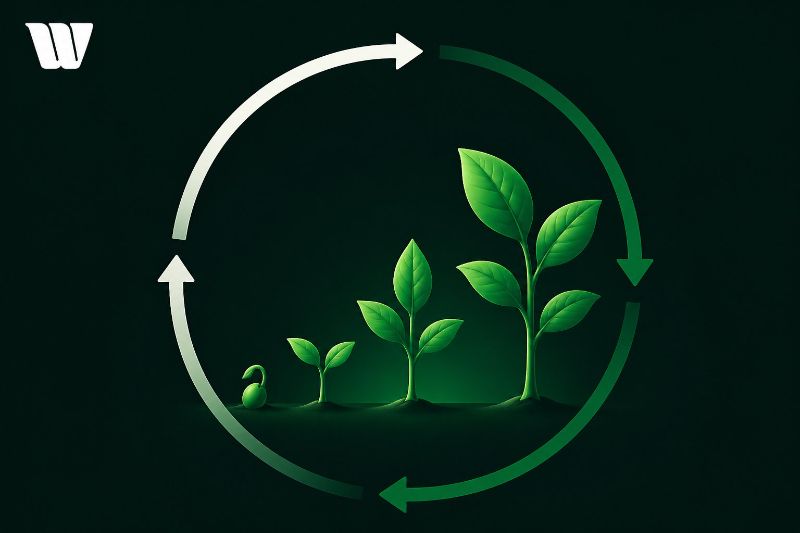
The startup growth cycle is a structured sequence of five phases—customer discovery, validation, growth, scaling, and maturity—that maps your evolution from unproven idea to market-dominant operation. Each stage demands different metrics, strategies, and decision-making priorities. You can't apply scale-stage thinking to a validation-stage business without destroying compounding potential. Where you sit right now determines everything from hiring to capital allocation—and what follows will show you exactly how to navigate each phase.
Key Takeaways
- The startup growth cycle is a structured sequence of five phases mapping a business from unproven idea to market-dominant operation.
- Each phase—ideation, early traction, product iteration, team scaling, and growth—requires distinct strategies and measurable success indicators.
- A startup's current cycle position determines which metrics matter most and guides critical decision-making priorities.
- Misidentifying your growth stage leads to misaligned strategies, wasted capital, and slower compounding progress over time.
- Revenue trajectory, churn rate, customer acquisition cost, and product-market fit signals are key diagnostics for identifying your stage.
What the Startup Growth Cycle Actually Means
The startup growth cycle is a structured sequence of five phases—customer discovery, validation, growth, scaling, and maturity—that maps how a business evolves from an unproven idea into a market-dominant operation.
Each phase demands different priorities. Early stages require aggressive market validation and rapid product iteration to confirm you're solving a real problem.
As traction builds, customer acquisition strategies sharpen, and revenue models get stress-tested against actual market behavior.
Mid-cycle growth forces you to refine scaling strategies while managing shifting team dynamics—what worked with five people rarely works with fifty.
You're not simply expanding operations; you're rebuilding systems under pressure.
Understanding where you sit within this cycle determines which metrics matter, which decisions are premature, and which delays cost you compounding growth opportunities.
The 5 Stages of the Startup Growth Cycle
Each of the five stages in the startup growth cycle carries distinct operational demands, performance benchmarks, and failure modes that determine whether a company advances or stalls.
You'll move through ideation, where market validation defines your survivability. Next, you enter early traction, where customer acquisition metrics reveal whether demand is real or assumed.
Product iteration then becomes your core focus—you're refining based on behavioral data, not assumptions. As momentum builds, team scaling becomes critical; hiring misalignment here kills otherwise viable companies.
Finally, you reach the growth stage, where sustainable revenue models determine long-term viability. Each shift requires you to abandon what worked previously and adopt strategies suited to your current operational reality.
Misreading which stage you're in guarantees misallocated resources and preventable failure.
How to Tell Which Growth Stage You're In
Knowing which stage you're in isn't a matter of intuition—it's a diagnostic exercise grounded in measurable indicators.
Examine your current indicators: revenue trajectory, customer acquisition cost, churn rate, and product-market fit signals. These growth metrics tell you exactly where you stand.
If you're still validating assumptions, you're in ideation or validation. If revenue exists but fluctuates unpredictably, you're in early traction.
Consistent month-over-month growth signals the growth stage, while operational strain and market saturation point toward maturity.
Ask yourself three questions: Are customers returning? Is your acquisition cost decreasing? Is revenue scaling faster than expenses?
Your answers map directly to a specific stage. Don't guess—let the numbers diagnose your position and drive your next strategic move.
Why Each Growth Stage Demands a Different Strategy
What works at one stage actively undermines you at another. In early stages, you're validating assumptions, so customer acquisition should prioritize learning over volume. Aggressive scaling before product-market fit wastes resource allocation and kills momentum.
As you advance, market adaptation becomes critical. Your competitive analysis shifts from "can we survive?" to "how do we dominate?" Team dynamics must evolve too — scrappy generalists give way to specialized operators who build repeatable systems.
Scalability challenges only emerge once you're growing, meaning premature infrastructure investment drains capital you actually need elsewhere.
Each stage demands a fundamentally different operating model. Misreading your stage means applying the wrong strategy at the worst possible time, and that mistake compounds quickly across every function in your business.
The Costliest Mistakes Founders Make at Each Growth Stage
Misreading your growth stage doesn't just slow you down — it destroys compounding progress you can't recover.
Founder pitfalls cluster predictably across stages: early-stage teams chase scale before validating product focus, creating market misalignment that burns capital fast.
Financial mismanagement peaks when you're over-hiring ahead of revenue signals, wrecking team dynamics before culture solidifies.
Mid-stage scaling errors typically involve expanding channels without sufficient customer understanding, diluting conversion efficiency across the board.
Late-stage strategy missteps often mean entering adjacent markets too early, fragmenting execution capacity you haven't fully built.
Each mistake shares one root cause — you acted on assumptions rather than verified data.
Map your actual stage rigorously, measure leading indicators obsessively, and match every resource decision to where you genuinely are, not where you want to be.
How Your Growth Stage Determines What Investors Expect
Every growth stage sends investors a different set of signals, and misaligning your pitch with those expectations is one of the fastest ways to lose a term sheet.
At the pre-seed stage, investor expectations center on founder conviction and market size. By Series A, they're analyzing retention curves, unit economics, and repeatable acquisition channels. Your funding strategies must reflect that shift.
Seed-stage decks heavy on traction data confuse investors looking for vision; growth-stage decks light on metrics lose credibility fast. Match your narrative to where you actually are.
If you're pre-revenue, sell the thesis. If you're scaling, sell the numbers. Investors pattern-match constantly, and you need your stage-appropriate story to trigger the right response before the first follow-up question hits.
Frequently Asked Questions
How Long Does Each Stage of the Startup Growth Cycle Typically Last?
Each stage varies: you'll spend 1-2 years in early development, 2-3 years scaling through funding phases, and 3-5 years in market adaptation. Your growth-focused decisions directly determine how quickly you'll progress through each cycle.
Can a Startup Skip a Growth Stage Entirely Under Certain Conditions?
Yes, you can skip a growth stage if your market readiness aligns with rapid growth acceleration. Strong product-market fit, sufficient capital, and proven demand let you bypass early stages, compressing your timeline dramatically.
How Does Startup Growth Cycle Differ Across Various Industries or Sectors?
Your startup's growth cycle varies by industry due to industry-specific challenges and sector growth strategies. Tech scales rapidly through network effects, while healthcare faces regulatory hurdles, and retail depends on consumer trends, demanding you tailor your growth approach accordingly.
What Tools or Software Help Founders Track Their Startup Growth Cycle?
You'll track your startup's growth cycle using tools like Mixpanel, HubSpot, and Tableau, which provide performance dashboards monitoring growth metrics, customer feedback, market trends, funding sources, and team alignment to drive data-backed decisions efficiently.
How Do Economic Downturns Impact a Startup's Growth Cycle Progression?
Economic downturns slow your startup's growth cycle by creating funding challenges and shifting consumer behavior. You'll need market adaptation strategies to maintain economic resilience, as investors tighten capital and customers prioritize essential spending over discretionary purchases.
Conclusion
You're not just building a company—you’re steering a sequence of fundamentally different businesses. Each growth stage demands different metrics, different capital allocation, and different leadership priorities. Misreading where you are costs time, money, and momentum. The founders who scale successfully aren't necessarily the smartest—they're the ones who accurately diagnose their current stage and execute accordingly. Know your stage, then act like it.