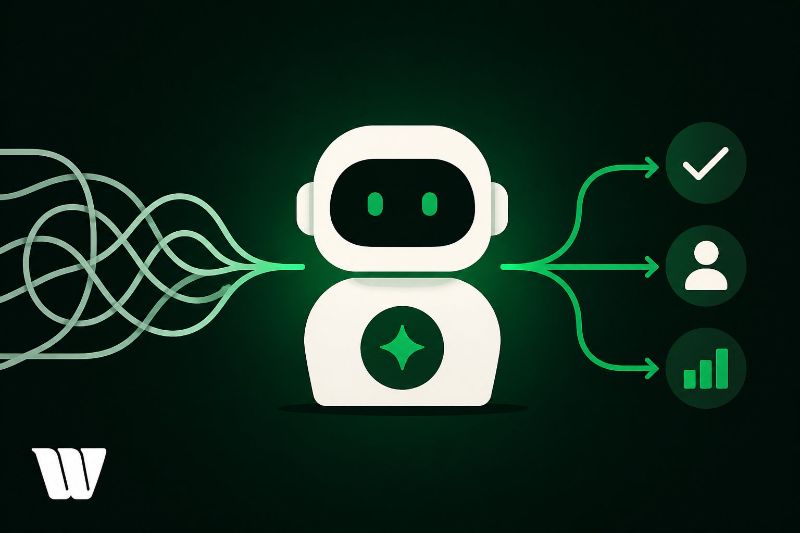
AI agents are autonomous software systems that perceive their environment, reason through available options, and take independent action to achieve specific goals. Unlike basic AI tools that respond to a single input and stop, agents operate in a continuous loop, sensing, deciding, acting, and evaluating. They retain context, adapt to new conditions, and manage multi-step tasks without constant human intervention. Stick around, and you'll uncover exactly how they work and why they matter.
Key Takeaways
- AI agents are autonomous systems that perceive their environment, make decisions, and take actions to achieve specific goals independently.
- Unlike basic AI tools, agents retain context, set sub-goals, and continuously adjust their behavior without constant human intervention.
- They operate through a continuous loop of sensing, reasoning, acting, and evaluating to improve their performance over time.
- Real-world examples include virtual assistants, autonomous vehicles, customer support bots, and smart home systems.
- AI agents are embedded in everyday life, powering recommendation systems, dynamic pricing, and personalized digital experiences.
What Is an AI Agent, Really?
An AI agent is a software system that perceives its environment, makes decisions, and takes actions to achieve a defined goal, without requiring a human to direct each step. It operates through a continuous loop: sense, reason, act, and evaluate.
Unlike traditional software that executes fixed instructions, an AI agent adapts its behavior based on new inputs and changing conditions. You can think of it as an autonomous entity capable of intelligent behavior, one that doesn't just respond but strategizes.
Its decision making process relies on goals, context, and feedback rather than hardcoded rules. Whether it's browsing the web, writing code, or managing workflows, the agent determines how to reach an objective independently.
That autonomy is what fundamentally distinguishes it from conventional automation tools.
Real-World Examples of AI Agents in Action
To ground the concept in practice, consider how AI agents are already operating across industries.
Virtual assistants like Siri and Alexa perceive voice input, process intent, and execute tasks autonomously. Autonomous vehicles continuously sense road conditions, evaluate hazards, and make real-time navigation decisions.
In smart home systems, agents monitor energy usage and adjust settings based on behavioral patterns. Customer support bots handle thousands of simultaneous queries, escalating complex cases without human intervention.
Gaming AI opponents adapt strategies dynamically, responding to your unique playstyle. Predictive analytics agents analyze historical datasets, identify patterns, and generate actionable forecasts for business decisions.
Each example shares a common architecture: perception, reasoning, and action. You're not just observing automation, you're witnessing agents that learn, adapt, and operate with measurable autonomy.
How AI Agents Process Information and Take Action
Next comes decision making: the agent evaluates possible responses using a reasoning model, policy function, or language model backbone. It selects the action with the highest expected utility given current constraints.
Finally, it executes, calling an API, generating text, or triggering a downstream tool.
You should understand that each stage is stateful, meaning prior outputs condition future behavior, creating a feedback loop that sharpens the agent's performance over time.
AI Agents vs. Basic AI Tools: What's the Difference?
What separates an AI agent from a basic AI tool isn't raw capability, it's autonomy and state. A basic AI tool responds to a single input and terminates. It holds no memory, tracks no goals, and initiates nothing independently. You ask, it answers, then it resets.
AI agent capabilities extend beyond that transactional model. An agent persists across interactions, retains context, sets sub-goals, selects tools, and adjusts behavior based on feedback loops. It doesn't just respond; it reasons and acts sequentially.
AI tool limitations become obvious at scale. When your task requires multiple steps, external data retrieval, or adaptive decision-making, a static tool breaks down. An agent doesn't. It manages complexity dynamically, executing, evaluating, and correcting course without requiring your intervention at every step.
How AI Agents Are Already Changing Everyday Life
AI agents aren't confined to research labs or enterprise software, they're already embedded in systems you interact with daily. When you ask Siri or Google Assistant to reschedule a meeting, you're engaging a personal assistant that parses intent, queries external calendars, and executes multi-step actions autonomously.
Your smart home operates similarly, thermostats like Nest analyze your behavioral patterns, predict preferences, and adjust conditions without explicit commands.
Streaming platforms deploy recommendation agents that continuously refine content suggestions based on your viewing behavior. E-commerce systems use agents to dynamically adjust pricing, manage inventory, and personalize product displays in real time.
These aren't passive tools waiting for input, they're continuously operating systems that observe, reason, and act across digital environments you navigate every day.
Frequently Asked Questions
Are AI Agents Safe to Use for Sensitive Personal Data?
You should exercise caution when using AI agents with sensitive personal data. They're only safe when they implement strong data encryption and robust privacy measures, so you must verify these protections exist before sharing confidential information.
How Much Does It Cost to Build or Use an AI Agent?
Ironically, development costs vary wildly, you'll pay nothing to thousands monthly. You can access subscription models like OpenAI's API affordably, yet building custom AI agents demands significant investment in infrastructure, talent, and ongoing maintenance.
Can AI Agents Make Mistakes or Produce Harmful Outcomes?
Yes, AI agents can make mistakes. You'll encounter error analysis challenges when they misinterpret data or context. Their ethical implications are significant, they can produce biased, harmful, or unintended outcomes if you don't monitor them carefully.
Do AI Agents Require an Internet Connection to Function Properly?
Like HAL 9000 operating autonomously, you'll find AI agents don't always need internet connectivity. They can leverage local processing and offline capabilities, depending on their design, though cloud-based agents require constant connectivity for real-time data and model updates.
Who Is Responsible When an AI Agent Makes a Wrong Decision?
When an AI agent makes a wrong decision, you're dealing with shared liability issues. You, as the developer, deployer, or user, bear responsibility within established accountability frameworks, depending on your role in the system's design and deployment.
Conclusion
You're living through a pivotal shift in how intelligent systems operate. AI agents aren't passive tools, they're autonomous decision-makers reshaping industries at remarkable speed. Consider this: the global AI agents market is projected to reach $47.1 billion by 2030, growing at a 44.8% CAGR. That trajectory reflects genuine structural transformation, not hype. Understanding how these systems perceive, reason, and act isn't optional anymore, it's foundational knowledge for traversing an increasingly agent-driven world.